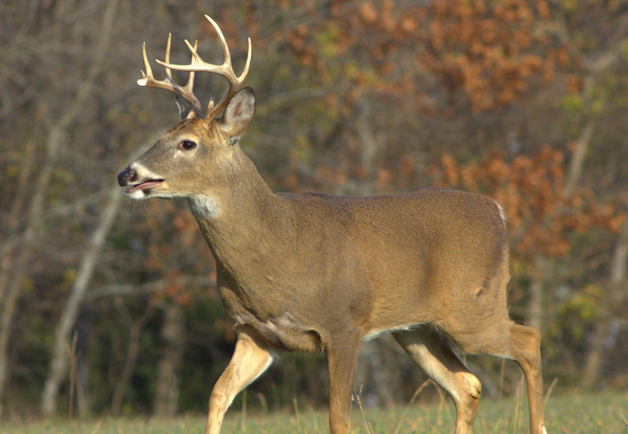
More than 100 suspected deer deaths have been reported in southeastern Wisconsin, with wildlife officials warning the 2026 outbreak could become one of the state’s largest on record.
The Wisconsin Department of Natural Resources has confirmed an outbreak of epizootic hemorrhagic disease (EHD) in wild white-tailed deer in Washington County, just weeks before Wisconsin’s fall deer hunting seasons get underway.
Two deer found dead near Richfield and West Bend tested positive for the virus, according to the DNR. The agency began collecting samples after landowners and residents reported clusters of apparently healthy deer suddenly turning up dead, many of them in or near ponds, creeks and other water sources.
The outbreak appears to be considerably larger than the two laboratory-confirmed cases suggest. By August 20, the DNR had received more than 100 reports of dead deer showing signs consistent with EHD across Washington, Waukesha and Ozaukee counties. The first reports began arriving in late July, earlier than Wisconsin typically sees EHD activity.
DNR Deer Herd Health Specialist Erin Larson told Wisconsin Public Radio that the number of affected deer could approach or even exceed the state’s largest recent outbreak, which occurred in Crawford County in 2019 and involved an estimated 226 suspected EHD deaths.
What Is EHD?
EHD is an often-fatal viral disease primarily affecting white-tailed deer. Unlike chronic wasting disease (CWD), it is not spread directly from deer to deer. Instead, tiny biting flies known as midges or “no-see-ums” transmit the virus between animals.
Infected deer can develop a high fever, weakness, excessive salivation and swelling around the head and neck. Because of the fever and dehydration, sick deer frequently seek water, which explains why groups of dead deer are often discovered around ponds, streams and other water sources. Severe infections can kill deer in a relatively short period of time.
The good news is that EHD outbreaks are usually temporary. They typically occur from late summer through fall and end after the first hard frost kills the midges responsible for transmitting the disease.
EHD Isn’t New to Wisconsin — But This Outbreak Stands Out
Wisconsin recorded its first known EHD outbreak in 2002, when approximately 14 deer were found dead in Iowa County. The state has experienced sporadic outbreaks since then, including events in 2012, 2019, 2020, 2021 and 2024.
The 2019 outbreak affected seven southwestern Wisconsin counties, with Crawford County reporting as many as 226 suspected EHD deaths. More recently, EHD was confirmed in Chippewa, Jackson, Monroe and Waukesha counties in 2024, but estimated mortality in those counties ranged from only three to 30 deer each. No confirmed Wisconsin outbreaks were listed for 2022, 2023 or 2025.
That makes the concentration of reports in southeastern Wisconsin this summer noteworthy. The DNR says Wisconsin deer have relatively limited previous exposure to EHD compared with populations in parts of the southern and western United States, where the disease occurs more regularly.
What Does This Mean for Wisconsin Deer Hunters?
For hunters in Washington County and surrounding areas, the immediate concern is localized deer mortality. Properties experiencing concentrated EHD deaths could see fewer deer this fall, even if the statewide population is largely unaffected.
The DNR is cautioning, however, that even visually dramatic EHD outbreaks generally don’t produce significant long-term effects on Wisconsin’s overall deer herd. Deer numbers in affected areas can recover, while the outbreak itself should end when freezing temperatures eliminate the midges.
EHD also does not infect humans. According to the DNR, people cannot contract the virus by handling an infected deer, eating venison from an infected deer or being bitten by an infected midge. The agency nevertheless recommends avoiding unnecessary handling of deer found dead because carcasses can potentially contain other pathogens.
Hunters Can Help DNR Track the Outbreak
Hunters, landowners and others who encounter deer behaving abnormally or find dead deer—particularly animals found in or near water—are encouraged to report them to the Wisconsin DNR.
Useful reports include the location and county, number of deer involved, date they were observed and the condition of the animals. The DNR does not need to laboratory-test every carcass once EHD has been confirmed in an area, but reports remain important for determining how widespread and severe the outbreak becomes.
Wisconsin DNR: EHD information and current outbreak updates
Check Wisconsin Deer Seasons With Hunterizer
With Wisconsin’s fall hunting seasons approaching, hunters can use the Hunterizer app to check deer season dates, hunting zones, legal weapons, bag limits and other regulations for the area they plan to hunt.
Disease outbreaks like the one in Washington County are also a reminder that conditions on the ground can change even when hunting regulations don’t. Hunters scouting southeastern Wisconsin should watch for sick or dead deer and report unusual mortality to the DNR while continuing to follow current Wisconsin hunting regulations.
Hunterizer helps answer the most important question before you head into the field: What can I hunt here today?