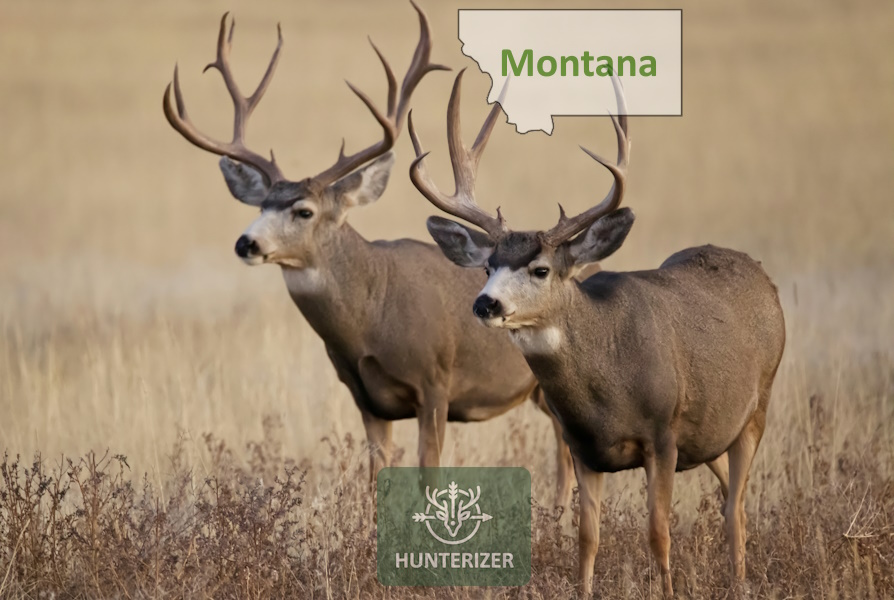
Elk remain strong across much of Montana, mule deer are showing encouraging recovery in several regions, and pronghorn numbers are booming in parts of eastern Montana. Here is what FWP’s 2026 surveys say about hunting prospects across Regions 1 through 7.
Montana Fish, Wildlife & Parks has released its 2026 hunting forecasts for all seven FWP regions, providing hunters with a statewide look at elk, mule deer, white-tailed deer and pronghorn populations heading into the fall seasons. After several relatively mild winters, the overall picture is encouraging, but conditions vary substantially depending on species and location.
Some of the strongest news comes from elk herds in western and southwestern Montana and pronghorn populations in the east. Mule deer are also showing signs of recovery in several areas that were hit hard by drought and the severe 2022-23 winter. However, hunters will still find depressed mule deer populations in portions of central and western Montana, low whitetail numbers in parts of Region 6, and sharply reduced elk numbers in the Missouri River Breaks.
2026 at a Glance
Elk: Generally strong across western, southwestern and central Montana, with notable concerns in the Missouri River Breaks.
Mule deer: Improving in several regions after recent mild winters, although many populations remain below historic averages.
White-tailed deer: Stable or improving across much of western Montana, but disease and previous EHD outbreaks continue to affect some areas.
Pronghorn: One of the brightest spots for 2026, particularly in Regions 6 and 7, while some western and south-central populations remain depressed.
Elk: Strong Across Much of Montana, but Not Everywhere
Region 1 – Northwest: Hunters should expect elk populations to be similar to slightly better than 2025. Calf recruitment in the Clark Fork drainage averaged 32 calves per 100 cows, while the Lost Trail herd appears stable to slightly increasing. The Bob Marshall Wilderness continues to have relatively low elk numbers despite improved calf recruitment.
Region 2 – Western: The elk outlook is particularly encouraging. All surveyed Upper Clark Fork districts were within or above population objectives, with increasing populations in several areas. HD 270 in the Bitterroot recorded its second-highest elk count ever, while other herds around Missoula and the Blackfoot Valley are also trending upward. Hunters should remember, however, that substantial numbers of elk spend time on private land.
Region 3 – Southwest: Southwest Montana continues to offer some of the state’s strongest elk opportunities. Herds around Livingston remain robust, HD 320 reached a record-high count, and elk numbers in the Pioneer and Tendoy management units remain strong. Several Butte-area districts are above objective, as are some Townsend-area populations. The major complication is access: significant numbers of elk can be concentrated on private property, while popular public lands can experience heavy hunting pressure.
Region 4 – North-central: Elk numbers are described by FWP as very strong and generally meet or exceed objectives. Here again, distribution is important: large herds can congregate on private land with limited access, leaving considerably fewer elk on nearby public ground.
Region 5 – South-central: Elk remain abundant, with 2026 surveys indicating stable to slightly increasing herd sizes. Access may be the bigger challenge than elk numbers because many animals are found on private land.
Region 6 – Northeast: This is the major exception to the generally positive statewide elk picture. Missouri River Breaks surveys found elk numbers 22% below the 2024 survey and 65% below the long-term average. FWP has responded by substantially reducing antlerless licenses and some archery opportunities. The Bears Paw population presents a better picture and remains within objective.
Region 7 – Southeast: Elk remain concentrated primarily in HD 700 and the Southeastern Montana Elk Management Unit. FWP reports strong numbers and calf recruitment in the southeastern unit, while HD 700 is below objective for both total observed elk and bull-to-cow ratios. Access can be difficult, particularly in HD 702 where many elk occupy private land.
Mule Deer: Recovery Is Underway, but It Is Uneven
Montana’s mule deer story is more complicated. Several consecutive mild winters have helped recruitment and survival, and some of the populations hit hardest earlier in the decade are finally moving in the right direction.
In Region 1, mule deer are expected to be stable to slightly increasing following good fawn survival, although antlerless harvest is not available. Region 2 remains below historic levels overall, but several survey areas showed strong fawn recruitment and hunters can expect conditions similar to or better than last year.
Region 3 varies considerably. Mule deer around Livingston remain below long-term averages, while Sheridan-area populations are expected to have increased for a third consecutive year. Dillon-area herds have also been recovering, supported by excellent fawn survival during the mild winter. Numbers remain relatively low around Butte and in some areas north of Helena, while Bozeman-area districts are meeting or exceeding population goals.
Region 4 is similarly mixed. Agricultural areas can hold moderate to strong populations, while mule deer along the northern Rocky Mountain Front and Missouri Breaks remain much lower after drought and the difficult winters of 2022 and 2023. Antlerless opportunities consequently remain very limited across much of the region.
In Region 5, central and eastern areas are near or above long-term averages, but other survey areas remain 30% to more than 60% below average. Some districts recorded better fawn recruitment this spring, providing another sign that recovery may be underway.
The outlook becomes more encouraging farther east. Region 6 mule deer densities increased 32% from 2025 and are now slightly above the long-term average. Fawn-to-adult ratios are also 21% above average, although buck ratios remain about 15% below their long-term average.
In Region 7, mule deer numbers increased 15% from 2025. They remain approximately 17% below the long-term average, but FWP recorded 55 fawns per 100 adults. Good winter survival and improved fawn recruitment provide encouraging evidence that southeastern Montana’s mule deer recovery is continuing.
White-Tailed Deer: Good Prospects in the West, EHD Effects Remain in the East
Whitetail numbers in Region 1 should continue increasing following another mild winter, with spring surveys recording 29 to 54 fawns per 100 adults. Buck harvest has also been stable to increasing, and FWP expects availability of older bucks to have improved. Region 2 is similarly stable to increasing and remains one of Montana’s more important whitetail hunting regions.
Conditions are more localized in Region 3. Whitetails are expanding in some areas, but much of the best habitat is on private agricultural and river-bottom land. Chronic wasting disease is an important consideration in portions of southwest Montana, particularly around the Ruby and Beaverhead river valleys and several Bozeman-area districts.
Region 4 generally has strong whitetail populations, although localized EHD outbreaks during 2025 caused moderate to severe losses in some areas. Region 5 has improved slightly, but many areas remain below long-term averages.
The most concerning whitetail situation is in Region 6, where surveyed densities are 56% below the long-term average. Deer along portions of the Milk and Missouri rivers are still recovering from EHD outbreaks in 2024 and 2025. FWP says hunters may find better whitetail opportunities farther into prairie habitats away from the hardest-hit river corridors.
In Region 7, whitetail numbers vary locally, but there has been no significant EHD activity reported so far in 2026. Previous outbreaks caused localized losses, making scouting especially important when choosing where to hunt.
Pronghorn: Eastern Montana Is the Standout for 2026
For hunters who drew an antelope license, some of Montana’s most encouraging 2026 numbers come from the eastern half of the state.
Opportunities are relatively limited in Regions 1 and 2, with only small populations in western Montana. Region 2’s HD 215 population increased from last year but remains below its long-term average.
Region 3 is highly variable. Some populations are recovering, while others remain depressed following drought and the severe 2022-23 winter. HD 300 remains dramatically below average, while populations around Helena are above average and HD 360 in the Madison Valley has shown a strong increase that could produce an excellent season.
In Region 4, drought has continued to affect some western pronghorn populations, resulting in reduced quotas in several districts. Eastern portions of the region are doing better, and quotas were increased in some areas. Region 5 is generally less encouraging, with declines prompting FWP to reduce either-sex and doe/fawn licenses in several districts, although HD 586 is an exception where increasing numbers resulted in additional licenses.
The situation changes dramatically in Region 6. Pronghorn numbers increased for a third consecutive year and now stand 36% above the long-term average, with 2026 densities reaching their highest level since 2003. FWP increased quotas in some districts in response.
But Region 7 may have the strongest pronghorn story in Montana this year. FWP’s summer aerial count was the highest since 2006—27% above 2025, 69% above the 10-year average and 51% above the average dating back to 1992. The southeastern portion of the region holds roughly six pronghorn per square mile compared with about three per square mile in the northern portion. FWP increased license availability in response to the strong counts and fawn production.
Moose and Other Limited-Entry Big Game
FWP’s regional forecasts concentrate primarily on elk, deer and pronghorn, but hunters holding limited-entry licenses should pay close attention to local conditions and regulations. In Region 1, for example, moose populations appear generally stable but remain below historic highs. FWP reduced HD 111 moose licenses from 10 to eight for 2026 because of declining harvest rates.
Hunters pursuing moose, bighorn sheep, mountain goat or other limited-entry species should rely on the regulations and district-specific information associated with their permits rather than trying to draw conclusions from the broader deer and elk trends.
What Should Montana Hunters Take Away From the 2026 Forecast?
Overall, 2026 looks like a relatively encouraging big game year for Montana. Multiple mild winters have improved survival and recruitment, particularly for deer populations that struggled following drought and the severe winter of 2022-23. Elk remain abundant across large portions of western, southwestern and central Montana, while mule deer recovery is becoming increasingly visible in eastern Montana. Pronghorn numbers in Regions 6 and 7 are among the strongest findings in this year’s surveys.
Still, statewide numbers don’t guarantee a good hunt. Access may be just as important as population size in 2026. FWP repeatedly notes that large numbers of elk and deer occupy private land in several regions. Hunters relying on public land should scout access carefully, consider Montana’s Block Management Areas and be prepared to hunt farther from roads and heavily used access points.
Montana’s 2026 deer and elk archery season runs Sept. 5-Oct. 18, followed by the general season Oct. 24-Nov. 29. Pronghorn, limited-entry hunts, shoulder seasons and district-specific opportunities have their own dates and restrictions, so hunters should verify the rules for their species, license and hunting district before heading afield.
Plan Your Montana Hunt with Hunterizer
With seven FWP regions, hundreds of hunting districts and regulations that can change depending on species, license, weapon and location, keeping track of Montana’s hunting rules can quickly become complicated.
The Hunterizer app helps Montana hunters see what they can hunt today and quickly check season dates, hunting districts, legal weapons, bag limits and other important regulations and maps. Once you’ve used FWP’s 2026 forecast to decide where the hunting prospects look best, use Hunterizer to help make sure you understand the rules that apply when you get there.
Population forecasts can tell you where the animals may be. Hunterizer helps you determine when and how you can legally hunt them.