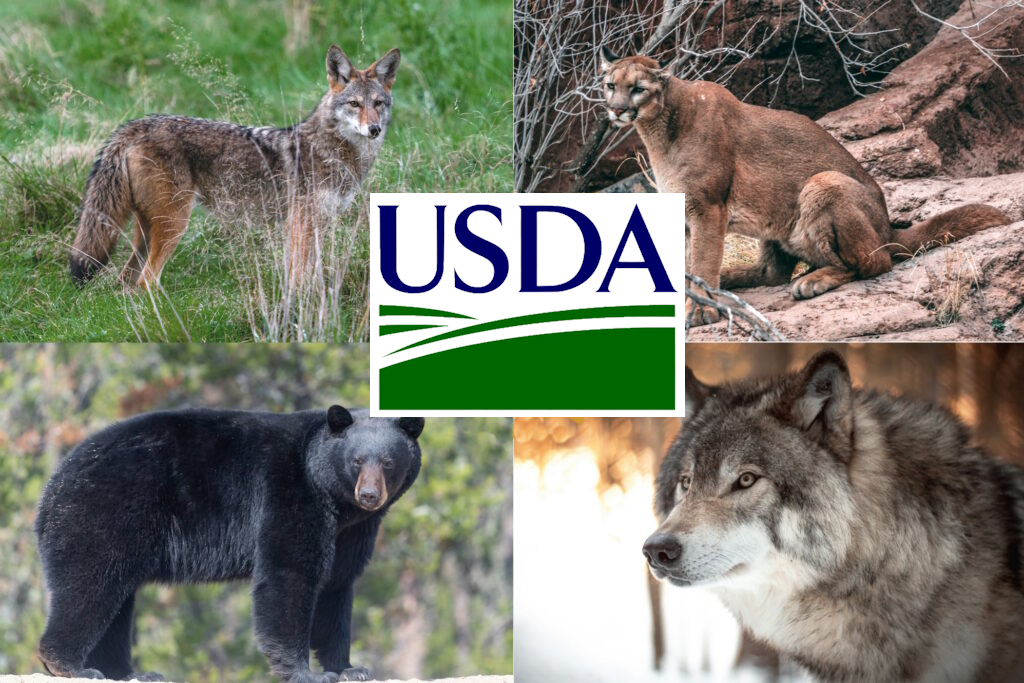
New USDA data offers a look at the other side of wildlife management in California, where federal crews lethally removed predators, feral pigs, geese and other wildlife to protect livestock, agriculture, property and public safety.
Federal wildlife managers killed roughly 28,000 animals in California during fiscal year 2025, according to newly released data from the U.S. Department of Agriculture’s Wildlife Services program.
For hunters, some of the most interesting numbers are not the overall total, but the species involved. California removals included 3,285 coyotes, 1,743 feral swine, 18 black bears and 14 mountain lions, along with thousands of squirrels and birds. No wolves were killed by the federal program in California during the year.
Why Is the Government Killing Wildlife?
Wildlife Services is a federal wildlife-damage management program rather than a hunting program. Its personnel respond to requests from ranchers, farmers, government agencies, airports and others when wildlife is damaging crops or property, killing livestock, threatening people or creating other conflicts.
The program uses both lethal and nonlethal techniques. Nationwide, Wildlife Services encountered approximately 28.1 million animals during FY2025 and dispersed about 25.2 million, or 89.7%, without killing them. About 2.83 million animals were lethally removed, with invasive species accounting for nearly 87% of that total.
California’s numbers nevertheless provide an interesting comparison with the wildlife that hunters encounter in the field.
Bears, Mountain Lions, Coyotes and Feral Pigs
The 18 black bears removed by Wildlife Services are particularly notable because black bears are a regulated big-game species that California hunters can legally pursue during established seasons.
Mountain lions are a very different case. Recreational mountain lion hunting has been prohibited in California for decades, but individual lions can still be lethally removed under certain circumstances involving depredation or threats to people.
Wildlife Services killed 14 mountain lions in California during FY2025.
Coyotes accounted for a much larger number: 3,285 were killed. The federal data also provides an unusual look at how those animals were taken. In California, approximately 2,200 coyotes were shot with firearms, 387 were killed using neck snares and 44 with foothold traps. Wildlife Services reported no use of cyanide for California coyotes.
Another 1,743 feral swine were removed. Wild pigs are of obvious interest to California hunters, although California has recently changed how wild pigs are classified and managed.
What About Geese and Other Game Birds?
Birds also make up part of Wildlife Services’ lethal-control work. USDA’s FY2025 data includes Canada geese and numerous other bird species killed as part of wildlife-damage management nationwide. Birds are commonly managed around airports, agricultural operations and other locations where large concentrations can create safety or economic problems.
That creates an interesting overlap with hunting. Canada geese are migratory game birds and are legally hunted in California during established seasons, yet problem geese can also be removed outside ordinary recreational hunting through authorized wildlife-control programs.
The federal data includes other birds and mammals that may also be huntable species in various states. However, the publicly summarized California figures released with the story do not provide a sufficiently clear species-by-species breakdown to confidently assign a California kill number to every game bird, so Hunterizer is not attaching an unverified number to California geese.
What Happened to the Meat?
This is another part of the Wildlife Services program that hunters may find interesting.
USDA says that when lethal control is necessary, Wildlife Services attempts to donate as much usable meat as possible. During FY2025, the agency donated more than 175 tons of deer, goose and other meat for human consumption, which USDA estimates provided more than one million servings of protein.
Another 21 tons or more of meat went to wildlife rehabilitation centers, zoos and other facilities for animal consumption.
USDA has separate policies governing edible meat, animal parts and disposal of wildlife carcasses.
However, the national donation figures should not be confused with California-specific numbers. USDA’s published summary does not say how much meat from the 28,000 animals killed in California was donated, nor does it establish that meat from the 18 bears or 1,743 feral pigs specifically went to food banks or other human-consumption programs.
No Wolves Killed by Federal Wildlife Services in California
One number stands out: zero wolves.
Wildlife Services killed 329 wolves nationwide during FY2025, but none were killed by the federal program in California.
That does not mean no California wolves were lethally removed. Federal Wildlife Services personnel assisted California officials with nonlethal efforts involving a Sierra County wolf pack blamed for killing nearly 100 calves over roughly seven months, including using drones to haze wolves away from livestock.
Those efforts ultimately failed to stop the depredations, and California state wildlife officials later lethally removed four wolves from the pack. Those removals were carried out by the state and therefore are not included as federal wolf kills in the USDA figures.
Wildlife Management Goes Beyond Hunting Seasons
The numbers provide a useful reminder that wildlife management does not end with hunting regulations. California hunters operate under seasons, bag limits, tags, weapon restrictions and species-specific rules, while wildlife agencies may separately authorize animals to be removed when they threaten livestock, agriculture, property, public safety or other wildlife.
Wildlife Services also emphasizes that lethal removal is only part of its work. Nationally, nearly nine out of every 10 animals the agency encountered in FY2025 were dispersed rather than killed.
For hunters, the data offers an unusually detailed look at that less-visible side of wildlife management — including thousands of coyotes and feral pigs and smaller numbers of California’s most recognizable large predators.
Check California Seasons With Hunterizer
Government wildlife-control activities should not be confused with what hunters are legally allowed to do. California’s rules vary dramatically by species: black bears have regulated hunting seasons, mountain lions are protected from recreational hunting, coyotes can be taken under very different rules, and migratory game birds such as geese are governed by detailed seasons, zones and bag limits.
The Hunterizer app helps hunters determine what they can legally hunt at their location on a particular date, with season dates, hunting zones, legal weapons, bag limits, shooting hours and other important regulations in one place.
Before heading into the field, check Hunterizer to see what is actually open where you hunt.