Major wildlife crossings are nearing completion or moving forward across California, including projects designed specifically to reconnect deer, elk and desert bighorn sheep habitat divided by highways.
California is investing heavily in wildlife crossings, and while the massive bridge over Highway 101 near Los Angeles has received most of the attention, several projects elsewhere in the state may be particularly important to hunters.
From a nearly completed deer and elk crossing in far Northern California to three planned crossings for desert bighorn sheep along Interstate 15, the projects are intended to reconnect habitat, reduce wildlife-vehicle collisions and allow animals to move between populations that have been separated by major highways.
Deer and Elk Crossing Nears Completion on US-97
One of the most directly relevant projects for hunters is being built on U.S. 97 near Grass Lake in Siskiyou County.
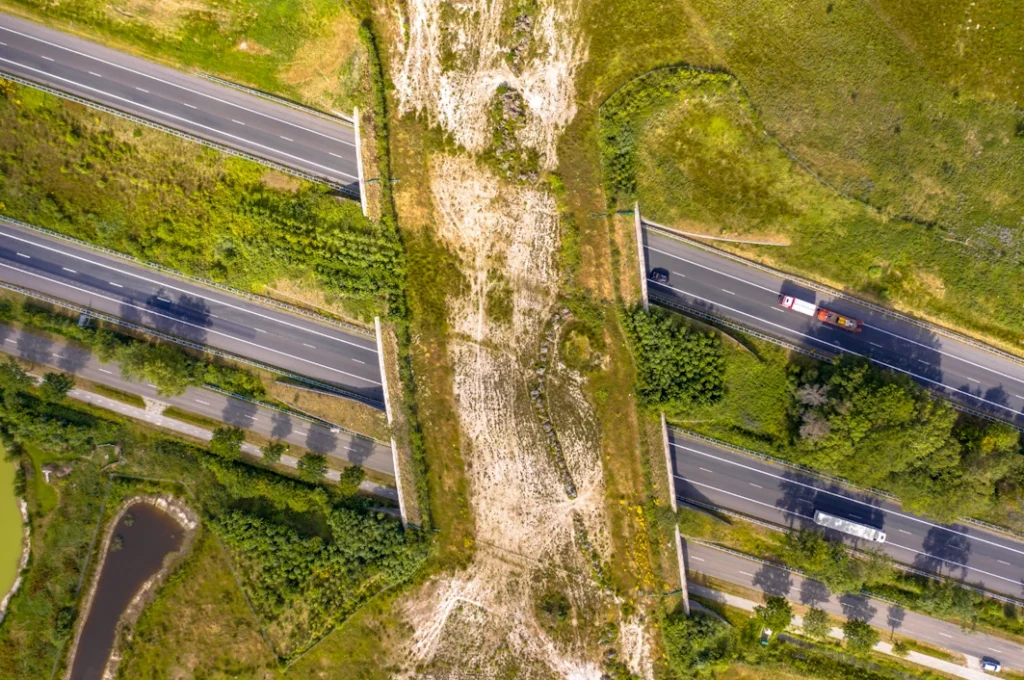
Caltrans is constructing an approximately 100-foot-long and 140-foot-wide wildlife overpass across the highway, along with roughly two miles of eight-foot wildlife fencing. The project also includes wildlife escape jump-outs and an improved undercrossing.
The location was not selected by accident. According to Caltrans, this section of U.S. 97 has the highest recorded wildlife-vehicle conflict rate in District 2. More than 50 deer and 16 elk were documented as vehicle fatalities there between 2015 and 2020. The new crossing is designed particularly to restore movement for deer and elk while reducing collisions.
The roughly $15.1 million project is essentially at the finish line. Caltrans’ construction database currently lists the project as 99% complete, while the agency’s project page says completion is anticipated in fall 2026, followed by a year of plant establishment.
For hunters, the importance goes beyond saving individual animals from vehicle collisions. Maintaining movement between seasonal ranges and neighboring herds can help preserve access to habitat and genetic connectivity over the long term.
Three Major Crossings Planned for Desert Bighorn Sheep
Farther south, an even larger wildlife-connectivity project is moving forward along Interstate 15 in San Bernardino County.
Caltrans, the California Department of Fish and Wildlife and Brightline West have partnered on three wildlife overcrossings that will span both I-15 and the future high-speed rail corridor. The crossings are planned in the vicinity of Cave Mountain, Soda Mountain and Clark Mountain Pass and are being designed primarily around the needs of desert bighorn sheep.
Tracking and genetic information indicates that I-15 acts as a major barrier between bighorn sheep populations. Unlike some other large mammals, sheep appear reluctant to use the existing washes and culverts beneath the freeway. Caltrans says this fragmentation can reduce genetic diversity and increase isolation among populations. At least 59 desert bighorn sheep were killed by vehicles in California between 2007 and 2020.
The current Caltrans schedule calls for design, engineering and right-of-way work through October 2026, construction beginning in December 2026 and project completion in July 2029.
For a prized California big-game species with relatively small and geographically separated populations, restoring movement between mountain ranges could have important long-term conservation benefits.
The Famous 101 Wildlife Crossing Opens in December
California’s best-known project is also approaching completion.
The Wallis Annenberg Wildlife Crossing at Liberty Canyon in Agoura Hills spans U.S. 101, reconnecting the Santa Monica Mountains with habitat to the north. The freeway has long created a major barrier for mountain lions, bobcats, coyotes, gray foxes and mule deer.
Although mountain lion conservation has driven much of the attention surrounding the project, mule deer and numerous smaller species are also expected to use the crossing. The project’s official site now says the crossing will open to wildlife on December 2, 2026.
Unlike a conventional highway bridge with a narrow wildlife path, the structure is being covered with soil and native vegetation to function as an extension of the surrounding habitat.
California Is Moving Toward a Statewide Crossing Strategy
These projects are part of a broader change in how California deals with highways and wildlife habitat.
In July 2026, Caltrans released its first required Wildlife Connectivity Program baseline inventory, identifying priority wildlife barriers on California’s State Highway System. Caltrans says roadkill hot spots have been documented on virtually every state route, including areas overlapping managed wildlife herds and threatened or protected species.
Other projects are already advancing. For example, Caltrans is planning another wildlife crossing on U.S. 101 in San Benito County at a location identified as a high-priority connectivity barrier. That project is currently in the planning and design process, with construction tentatively scheduled to begin in 2030.
For hunters, that means wildlife crossings may increasingly become part of deer, elk, bighorn sheep and other wildlife management discussions rather than remaining isolated conservation projects.
What Wildlife Crossings Could Mean for Hunters
Wildlife crossings do not directly create more game animals or guarantee improvements in hunting. Their effects depend heavily on where they are placed, whether animals actually use them and how surrounding habitat is managed.
However, strategically placed crossings can address several issues that matter to hunters: reducing highway mortality, reconnecting seasonal habitat, allowing animals to disperse into neighboring areas and maintaining genetic exchange between populations.
The US-97 project provides perhaps the clearest California example. Instead of simply fencing animals away from a highway, the project combines fencing with a large overpass and undercrossing opportunities, allowing deer and elk to continue moving across the landscape while keeping them away from traffic.
For desert bighorn sheep, connectivity may be even more important because relatively small populations can become isolated from one another by freeways, development and other infrastructure.
California’s current projects therefore represent more than an effort to prevent roadkill. They are increasingly being designed as wildlife-management infrastructure intended to keep large landscapes connected despite California’s extensive highway network.
Stay Current with Hunterizer
Wildlife habitat and access can change along with California’s hunting regulations, seasons and management decisions. Hunterizer helps California hunters keep important information in one place, including hunting seasons, zones, legal weapons, bag limits, maps and other regulations for deer, elk, bighorn sheep and other game species.
Before heading into the field, open Hunterizer to see what you can hunt today and review the regulations and maps that apply to where you’re hunting.