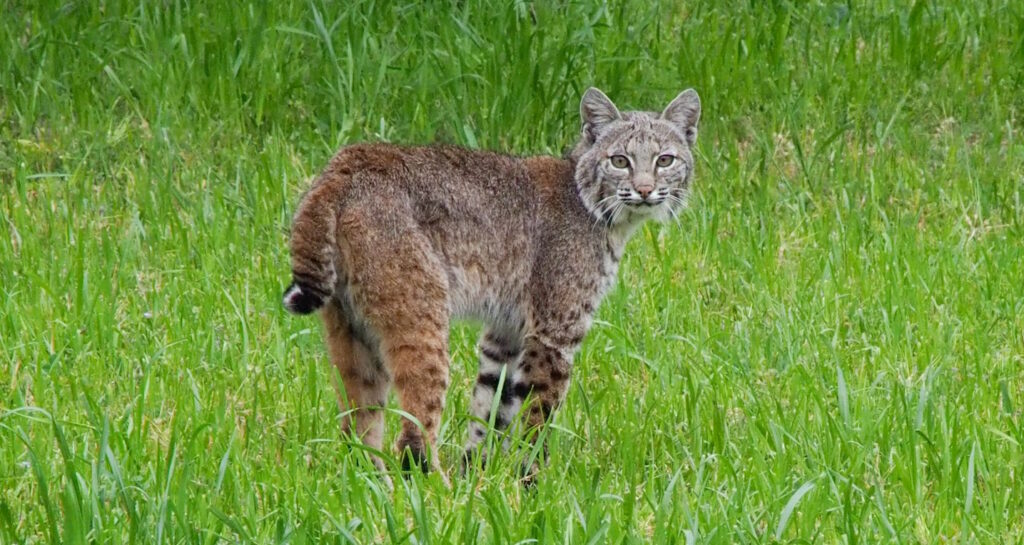
A new CDFW study finds California’s bobcat population is stable. A management plan expected this fall could determine whether the state will consider allowing bobcat hunting again.
The California Department of Fish and Wildlife has completed the most extensive bobcat population survey ever conducted in the state, estimating that approximately 62,000 bobcats live in California and concluding that the statewide population is stable. The findings are significant for wildlife management on their own, but they also raise a question California hunters have not had much reason to ask in recent years: Could bobcat hunting eventually return?
CDFW released its 140-page California Bobcat Population Monitoring Project Report of Findings on August 31. The five-year project used nearly 500 motion-activated cameras, fecal DNA analysis, GPS satellite collars, carcass necropsies and other modern research methods to develop what CDFW calls its most comprehensive assessment of the species to date.
California’s Bobcat Population Appears Stable
The new estimate puts California’s statewide bobcat population at about 62,000 animals. Bobcats were found across most of the state, with major urban areas and heavily developed agricultural portions of the Central Valley among the primary exceptions.
For historical perspective, previous estimates put the population at approximately 61,000 bobcats in the 1970s and 74,000 in the 1980s. CDFW cautions that those older numbers were developed using less rigorous methods, so they should not be treated as direct comparisons with today’s estimate. Nevertheless, the agency’s conclusion from the new research is clear: California’s statewide bobcat population currently appears stable.
Researchers also found lower bobcat densities in areas affected by major wildfire scars, while bobcats occurred at higher elevations more frequently than expected. CDFW found that most reported conflicts between people and bobcats involved chickens that were unprotected or kept in inadequately secured coops.
Bobcat Hunting Has Been Closed Since 2020
California once had a regulated recreational bobcat hunting season, but that changed with the passage of Assembly Bill 1254. Beginning January 1, 2020, California prohibited hunting, trapping or otherwise taking bobcats, with limited exceptions such as animals taken under depredation permits.
Importantly, however, the legislation did not necessarily make the recreational hunting prohibition permanent.
The law directed CDFW to develop a comprehensive bobcat conservation and management plan before recreational hunting could again be considered. The population research released this week was undertaken largely because of that requirement. CDFW itself describes the new report as the first step toward complying with that legislative mandate.
Could California Actually Reopen Bobcat Hunting?
A new season is not currently being proposed, and California hunters should not interpret the 62,000-animal estimate as an announcement that bobcat hunting is returning.
But the new research moves California closer to the point where that discussion could legally and scientifically take place.
Under California law, beginning in 2025 and subject to legislative funding, the California Fish and Game Commission may consider opening a bobcat hunting season in an area where it determines hunting is needed. Before that can happen, however, the Commission must adopt the bobcat management plan developed by CDFW and consider factors including bobcat populations, prey populations, nonlethal management alternatives, costs and public attitudes toward bobcat hunting.
In other words, finding a stable population does not automatically trigger a hunt. The Commission retains substantial discretion over whether recreational hunting should be used as a management tool.
The Next Step Could Be More Important for Hunters
The document California hunters should watch next is the Bobcat Conservation and Management Plan.
CDFW says it expects to release a draft plan within approximately 30 days of the August 31 announcement, with the agency’s bobcat program currently indicating public review is expected in early October 2026. The draft will then undergo a 30-day public and Tribal review period.
The plan is expected to address bobcat biology and ecology, population health, habitat, historical management, Tribal perspectives and future management recommendations.
Those recommendations will be particularly important. The population study tells California how many bobcats it likely has and how the population is doing. The management plan should provide a much clearer indication of what CDFW believes California should actually do with that information.
If regulated harvest is discussed as a potential management tool, it could begin a much larger debate before the Fish and Game Commission over whether some form of bobcat hunting should return. If the plan instead recommends maintaining the existing prohibition, the stable population estimate by itself will not reopen a season.
For hunters interested in seeing bobcat hunting restored, the upcoming public-review process may therefore be one of the first meaningful opportunities in years to weigh in on the future of bobcat management in California.
Hunterizer Will Follow the Bobcat Decision
For now, bobcat hunting remains prohibited in California, and hunters should not mistake the new population estimate for a regulation change.
Hunterizer will continue following CDFW and California Fish and Game Commission action as the new Bobcat Conservation and Management Plan moves forward. If California eventually proposes a regulated bobcat season, Hunterizer will track the proposed season dates, areas, methods of take and other requirements as they develop.
The Hunterizer app helps California hunters quickly check current hunting seasons, zones, legal methods, bag limits, regulations and maps for dozens of species — helping hunters know what they can hunt and where before heading into the field.