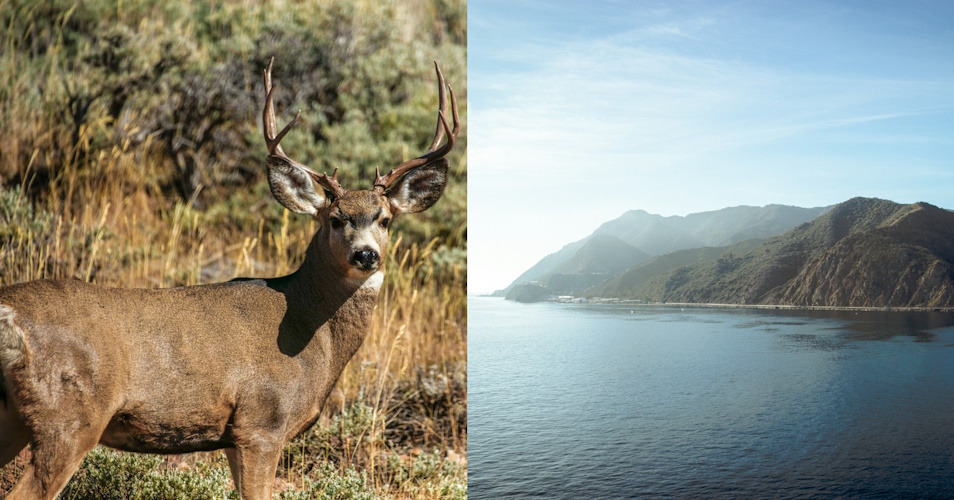
The Catalina Island Conservancy has confirmed that 670 mule deer were killed during the first phase of its controversial eradication project, more than three times the number originally anticipated. Safari Club International is challenging the court decision that allowed the operation to proceed, while questions remain about how many deer carcasses were recovered and what happened to the meat.
The controversial effort to eliminate Catalina Island’s entire mule deer population has entered a new phase following the completion of its first removal operation. On November 6, 2026, the Catalina Island Conservancy confirmed that professional wildlife management crews killed 670 mule deer during September and October, compared with approximately 200 initially expected.
The operation took place across roughly 5,300 acres in the Middle Ranch area. It was conducted under a Restoration Management Permit issued by the California Department of Fish and Wildlife (CDFW) in January 2026.
The Conservancy described the operation as an initial assessment intended to test removal techniques, evaluate deer distribution, and prepare for larger eradication efforts scheduled to resume in mid-2027.
More Than Three Times the Expected Deer Killed
The Conservancy’s 2025 spotlight surveys estimated approximately 2,040 deer across Catalina Island’s interior, excluding Avalon. Based on those estimates, officials anticipated removing approximately 200 deer during the initial operation.
Instead, crews killed 670 animals in just one portion of the island. The Conservancy believes this indicates that Catalina’s deer population is substantially larger than previously estimated.
The organization also reported that many deer appeared to be in poor physical condition, with visible ribs and limited body fat, suggesting potential food shortages.
However, the unexpectedly high number has renewed criticism from hunting organizations that question the scientific assumptions underlying the eradication program and whether complete removal is necessary.
What Happened to the Meat From 670 Deer?
Another question concerns the fate of the hundreds of deer killed during the operation.
The Conservancy confirmed that some deer were delivered to the California Condor Recovery Program, where they serve as food for endangered California condors. The project’s approved management plan also allows meat to be provided to tribal partners.
However, the Conservancy’s November announcement did not disclose how many carcasses were recovered, how many were donated, or whether any venison was distributed for human consumption.
Under the approved plan, carcasses near roads, trails, and public areas must be removed. Animals killed in more remote locations may be left on the landscape to decompose naturally and provide food for scavengers, including bald eagles and island foxes.
Consequently, it remains unclear what proportion of the 670 deer was utilized and what proportion was left in the field. The lack of a publicly disclosed carcass-by-carcass accounting raises questions about meat utilization and transparency in a project involving the elimination of an established game animal population.
Safari Club International Appeals Court Decision
The deer removal proceeded after a Los Angeles County Superior Court ruling in September rejected legal challenges brought by Safari Club International (SCI) and other organizations, including the Coalition to Save Catalina Island Deer and HOWL for Wildlife.
The plaintiffs argued that CDFW improperly authorized the complete eradication of an established game mammal population through a Restoration Management Permit without sufficient environmental review and public participation under California law.
The Superior Court dismissed the coalition’s claims, including its California Environmental Quality Act (CEQA) challenge, allowing the project to continue.
However, the legal battle is not over.
In a November 18 statement, SCI confirmed that it has appealed the lower court’s decision and requested a stay preventing further eradication activities until the appeal is resolved. No ruling granting that stay had been confirmed as of November 18.
SCI specifically pointed to the unexpectedly high number of deer killed during the initial operation as a reason for renewed scrutiny.
“When an operation results in the removal of more than three times the number of deer originally anticipated, it warrants a closer examination of the information guiding these decisions,” said SCI CEO W. Laird Hamberlin.
SCI maintains that the complete elimination of Catalina’s deer would permanently remove both a wildlife resource and a longstanding recreational hunting opportunity. The organization continues to challenge the adequacy of the scientific evaluation and the legal process used to approve the project.
Conservancy Maintains Eradication Is Necessary
The Catalina Island Conservancy argues that mule deer, introduced to the island for sport hunting nearly a century ago, are preventing native vegetation from recovering and contributing to the spread of invasive grasses.
According to the organization, deer browsing suppresses native shrubs and seedlings, potentially increasing wildfire risks and threatening habitat for native wildlife, including the Catalina Island fox.
The Conservancy maintains that previous management approaches have failed to achieve long-term ecosystem recovery and that complete deer removal is necessary to restore native habitats.
Hunting organizations and local opponents dispute the necessity of eliminating the entire population, advocating consideration of alternative approaches, including continued regulated hunting.
What Happens Next?
The first removal operation concluded in October, but the Conservancy intends to resume deer removal in mid-2027 as part of its multiyear project to eliminate mule deer from Catalina Island.
The immediate legal question is whether SCI and its partners can obtain a court-ordered stay before the next operation begins. The appeal will also continue the dispute over CDFW’s authority and the environmental review required for such a project.
Meanwhile, the confirmed killing of 670 deer has brought additional attention to population estimates, wildlife management decisions, and the ultimate disposition of the harvested animals.
For California hunters, the outcome could determine not only the future of Catalina Island’s deer population but also how similar wildlife eradication projects are reviewed and authorized in the state.
Stay Informed With Hunterizer
Hunterizer helps hunters stay informed about changing hunting regulations, seasons, legal weapons, bag limits, and hunting zones across California and other supported states. The Hunterizer app also provides interactive hunting maps and important wildlife management news, making it easier to plan hunts and stay current on developments affecting hunting opportunities.