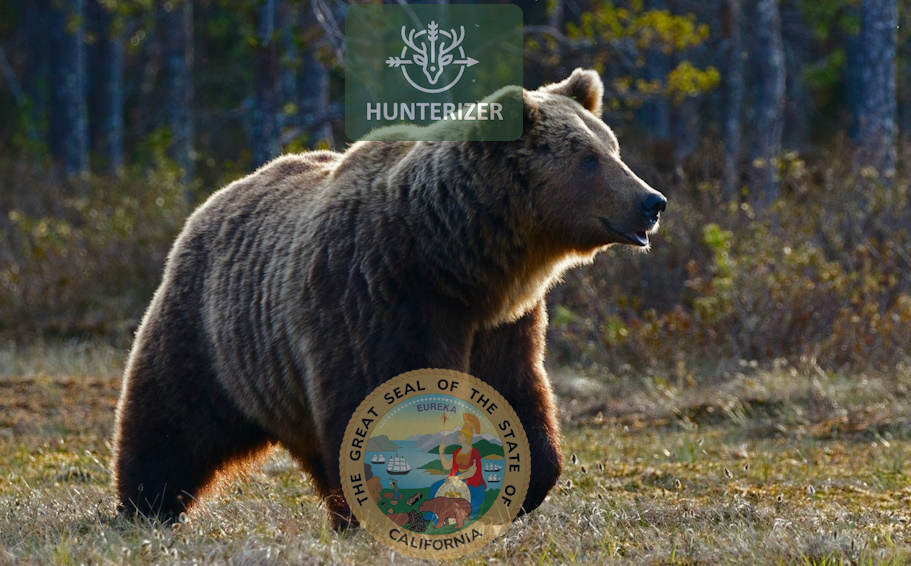
California’s controversial effort to begin planning for the possible return of grizzly bears has come to an end — at least for this legislative session.
Senate Bill 1305 failed to advance from the California Assembly Appropriations Committee’s suspense file on August 13, effectively killing the legislation for the 2025–2026 session. The bill had already passed the California Senate and an Assembly policy committee, bringing the state considerably closer to formally studying how grizzly bears could eventually be returned to California.
Hunterizer has been following SB 1305 throughout the legislative process. In June, we reported on the bill after it passed the California Senate by a 29–9 vote, explaining what the proposal could mean for hunters, ranchers and rural communities.
https://hunterizer.com/california-senate-passes-grizzly-bear-bill/
What SB 1305 Would Have Done
SB 1305 was introduced in February by Democratic State Senator Laura Richardson of Long Beach. The original legislation was called the California Grizzly Restoration Act and went considerably further than simply asking the state to study bears. It declared that it was the policy of California to restore grizzly bears to the state and directed the California Department of Fish and Wildlife (CDFW) to develop a publicly available roadmap for their reintroduction.
The bill was subsequently amended following opposition and concerns from ranchers, rural communities, agricultural organizations and other stakeholders. The version that moved through the Legislature no longer meant that bears would automatically be released if the bill became law. Instead, CDFW would have been required to evaluate potential reintroduction areas, determine whether a self-sustaining population was biologically viable, consult with tribes and affected communities, develop procedures for reducing conflicts with people and property, and establish a regulatory framework for future management.
Actual reintroduction could not have occurred until those and other requirements were satisfied. Nevertheless, for opponents of SB 1305, requiring the state to build the roadmap represented a significant first step toward eventually bringing grizzlies back to California.
A Los Angeles-Area Legislator Pushed a Plan That Could Affect Rural California
One of the political aspects of SB 1305 that drew attention was where its author represented.
Senator Laura Richardson is a Democrat representing California’s 35th Senate District and is based in Long Beach. Her district covers heavily urbanized communities in Los Angeles County rather than the remote mountain and rural areas generally discussed as potential grizzly habitat.
That geographic divide is significant to the debate surrounding the bill. Potential grizzly habitat identified in discussions surrounding reintroduction has included areas such as the Sierra Nevada, Klamath region and other large wildland landscapes — places far removed from Richardson’s urban Southern California district. As a result, many of the practical consequences of a future reintroduction — encounters with bears, livestock depredation, impacts on hunting and recreation, and the costs of managing another large predator — would likely have been experienced primarily by rural residents, hunters, ranchers and landowners living far from the district represented by the bill’s author.
That does not determine whether grizzly restoration is good or bad wildlife policy, but it is an important part of the debate: the communities most likely to live alongside a restored grizzly population are not necessarily the communities whose legislators have been leading the effort to bring the species back.
California Already Has Experience With Returning Large Predators
For many California hunters and ranchers, the grizzly proposal also came at a sensitive time because the state is already dealing with the expansion of another large predator: the gray wolf.
California’s wolf population has expanded significantly since wolves naturally returned to the state, creating new livestock conflicts and requiring CDFW to devote resources to monitoring, depredation investigations and conflict management. Opponents of SB 1305 questioned whether California should begin planning for the return of a much larger predator while the state is still adapting to its growing wolf population.
Grizzlies would present a different management challenge. Adult bears can occupy enormous home ranges and conflicts could involve livestock, campsites, hunters, hikers, rural residences and other recreational users. Establishing a viable population would therefore be much more complicated than simply identifying suitable habitat on a map.
CDFW itself noted earlier in the legislative process that the proposal would create substantial work for the department, including scientific assessment, tribal consultation, community engagement, conflict mitigation, training, cost estimates, regulatory development and eventually ongoing species management.
SB 1305 Had Already Made It a Long Way
The death of SB 1305 is particularly significant because the proposal had already cleared several major legislative hurdles.
The California Senate approved the bill 29–9 in May, sending it to the Assembly. The Assembly Water, Parks and Wildlife Committee subsequently approved the measure in June, allowing it to proceed to the Assembly Appropriations Committee.
That made the Appropriations suspense-file process one of the bill’s last major committee hurdles before a possible vote by the full Assembly. By failing to advance on August 13, SB 1305 will not reach that stage during the current legislative session.
For opponents of grizzly reintroduction, that is a major victory. California will not be required by SB 1305 to spend state resources developing the proposed grizzly reintroduction roadmap, and the legislation will not reach Governor Gavin Newsom’s desk.
Does This End the California Grizzly Debate?
Probably not.
California’s grizzly has been gone from the wild for more than a century, with the last confirmed wild California grizzly killed in 1924. Yet the animal remains California’s official state animal and appears prominently on the state flag, making the idea of restoration particularly attractive to some conservation organizations and tribal governments.
SB 1305 also demonstrated that the idea has substantial political support. A bill concerning the potential return of an enormous apex predator managed to pass the State Senate and an Assembly policy committee before finally being stopped in Appropriations. Supporters could introduce a new proposal in a future legislative session, potentially with different language designed to address fiscal or political objections that helped stop SB 1305.
For hunters, ranchers and residents of California’s rural counties, that means the issue is worth continuing to watch. SB 1305 may be dead, but the broader effort to explore bringing grizzly bears back to California is unlikely to disappear with it.
Hunterizer Will Continue Tracking California Wildlife Policy
Major wildlife-policy decisions can eventually change where and how Californians hunt, particularly when they involve predators, access, hunting zones and species management. Hunterizer will continue monitoring the California Legislature, CDFW and the Fish and Game Commission for developments affecting hunters.
The Hunterizer app helps California hunters keep track of current hunting seasons, regulations, species information and hunting zones in one place, including information for dozens of game and nongame species across the state. As California’s wildlife regulations and policies change, Hunterizer works to keep that information updated and accessible to hunters in the field.