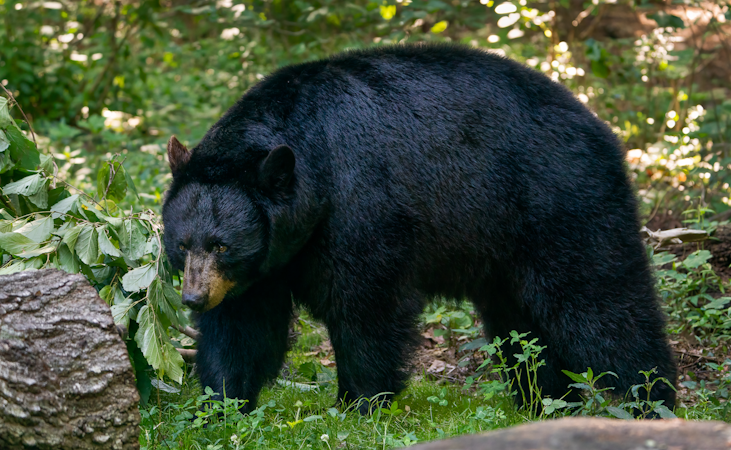
With approximately 19,000 black bears occupying much of Pennsylvania, wildlife managers are balancing expanding bear distribution, hunting opportunities, and increasing encounters with people.
Pennsylvania has one of the most successful black bear conservation stories in the eastern United States. Once largely restricted to remote forested regions, black bears are now found across much of the Commonwealth, including areas where sightings were historically uncommon.
According to the Pennsylvania Game Commission (PGC), the state’s black bear population is estimated at approximately 19,000 animals, compared with fewer than 5,000 during the 1970s. Bears now occupy more than three-quarters of Pennsylvania, and sightings have been confirmed in all 67 counties.
But while the long-term expansion is remarkable, the statewide population is currently considered relatively stable. The bigger question for wildlife managers is where bears are living, how frequently they encounter people, and how hunting can help maintain a sustainable population.
Where Are Pennsylvania’s Bears Expanding?
The traditional strongholds of Pennsylvania’s black bear population remain the heavily forested northern and northeastern regions, particularly the mountainous landscapes of the Pennsylvania Wilds and Pocono Mountains.
However, bears are increasingly encountered outside these core habitats. They occur in portions of western and southern Pennsylvania and occasionally appear in suburban communities around Pittsburgh, Philadelphia, and other population centers.
Not every sighting indicates an established breeding population. Young male bears often travel considerable distances when dispersing from their mothers, sometimes crossing agricultural areas, highways, and suburban neighborhoods before finding suitable habitat.
The Game Commission notes that heavily developed and agricultural areas, especially in southeastern Pennsylvania, generally provide less suitable habitat. Bears appearing in these locations are often transient rather than permanent residents.
Hunting Plays a Major Role in Bear Management
Pennsylvania uses regulated hunting as its primary tool for managing black bear populations. Unlike states where bears remain relatively scarce, Pennsylvania has established multiple hunting opportunities to control population growth and reduce conflicts in areas with high bear densities.
The results are substantial. During the 2024 hunting seasons, Pennsylvania hunters harvested 2,642 black bears across 56 counties and 21 of the state’s 22 Wildlife Management Units.
The harvest included bears taken during archery, muzzleloader, regular firearms, and extended seasons. These different opportunities allow wildlife managers to adjust hunting pressure based on regional population conditions.
Pennsylvania’s record bear harvest remains 4,350 animals, established in 2011. Although annual harvests fluctuate, bear hunting has become an important part of the state’s wildlife management program.
The Game Commission also monitors the proportion of female bears harvested, since removing too many breeding females can affect future population growth. This is one reason bear season lengths and hunting opportunities are periodically adjusted.
More Bears Also Mean More Conflicts
The expansion of Pennsylvania’s bear population has brought new challenges. Bears sometimes raid garbage containers, damage bird feeders, destroy beehives, feed on agricultural crops, or enter residential areas searching for food.
According to the state’s 2024–2029 Black Bear Management Plan, Pennsylvania averages approximately 3,689 reported human-bear conflicts annually.
However, increasing conflicts do not necessarily mean that the statewide population is growing rapidly. Development in traditional bear habitat, dispersing young bears, and changing natural food availability can all contribute to more encounters.
Wildlife managers therefore focus not only on the number of bears but also on their distribution and the frequency of conflicts in individual regions.
What Does This Mean for Pennsylvania Hunters?
For hunters, Pennsylvania’s broad bear distribution means opportunities are no longer limited to the state’s most remote northern forests.
Successful bear hunting still depends heavily on understanding habitat and seasonal food sources. During autumn, bears feed intensively on acorns, beechnuts, berries, and other available foods before entering their winter dens. Areas combining reliable food sources with dense escape cover can be particularly productive.
Hunters should also recognize that bear abundance varies considerably between Wildlife Management Units. A bear sighting in a suburban community does not necessarily indicate that the surrounding area offers good hunting opportunities or sufficient public access.
The PGC’s regional harvest information can help hunters evaluate areas, while the agency’s population monitoring helps determine where additional hunting pressure may be appropriate.
The Future of Pennsylvania’s Black Bears
Pennsylvania’s experience demonstrates that black bears can recover and thrive alongside a large human population when suitable habitat remains available and harvest is carefully managed.
The challenge is no longer simply increasing bear numbers. It is maintaining healthy populations in appropriate habitats while preventing excessive conflicts in communities where bears and people increasingly overlap.
For hunters, this means bear hunting will continue to serve two purposes: providing an opportunity to pursue one of Pennsylvania’s most impressive big-game animals and helping wildlife managers maintain a sustainable population.
Plan Your Pennsylvania Bear Hunt With Hunterizer
Pennsylvania’s bear hunting regulations vary by Wildlife Management Unit, hunting method, and season. Some areas offer additional archery or extended firearms opportunities, while others have shorter hunting windows.
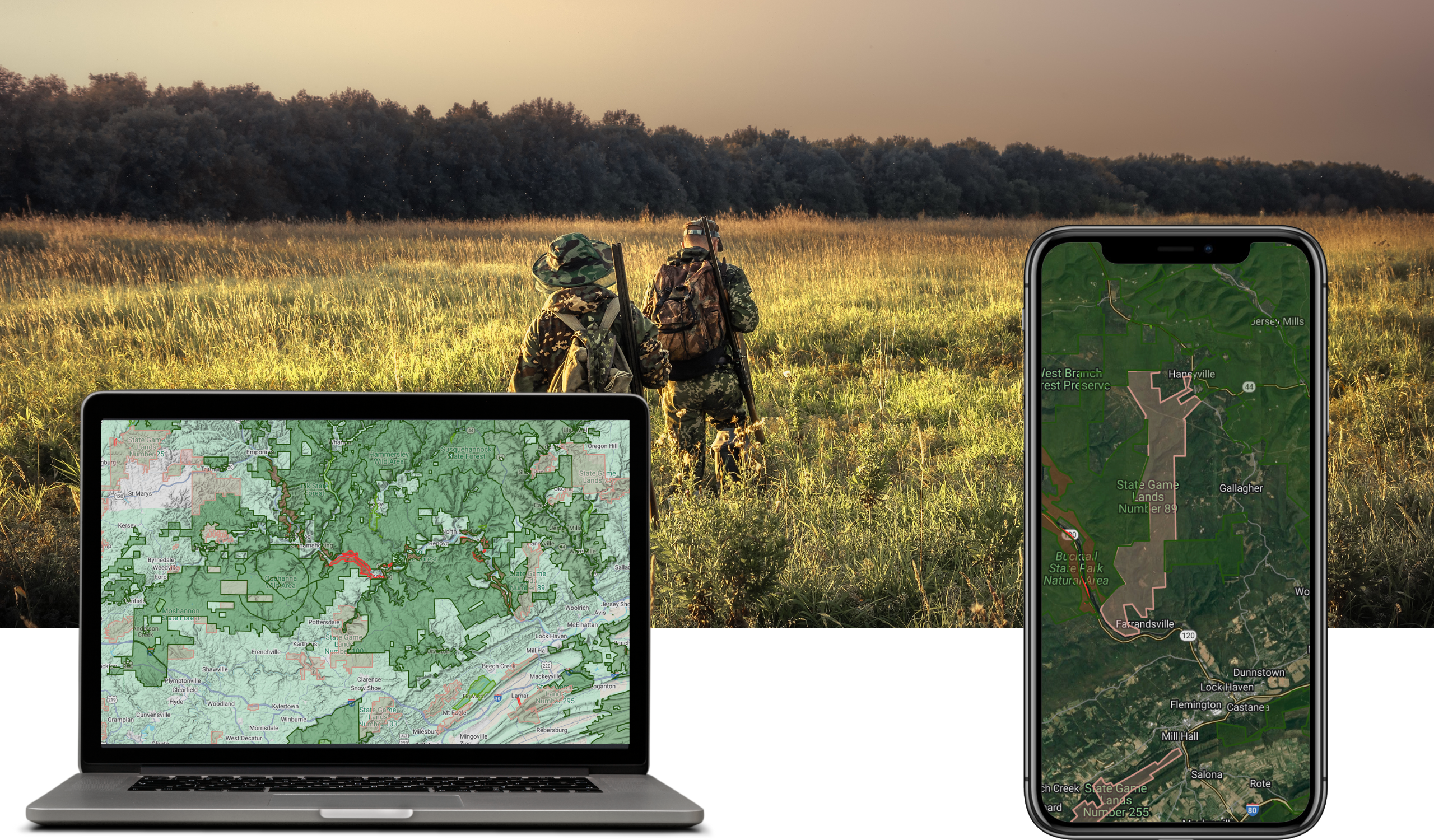
The Hunterizer app helps hunters determine what they can legally hunt at a specific location and date, including bear season dates, Wildlife Management Unit boundaries, legal weapons, bag limits, shooting hours, and other important regulations.
Whether you’re pursuing bears in Pennsylvania’s northern mountains or exploring hunting opportunities closer to home, Hunterizer helps you understand the rules before heading into the field.