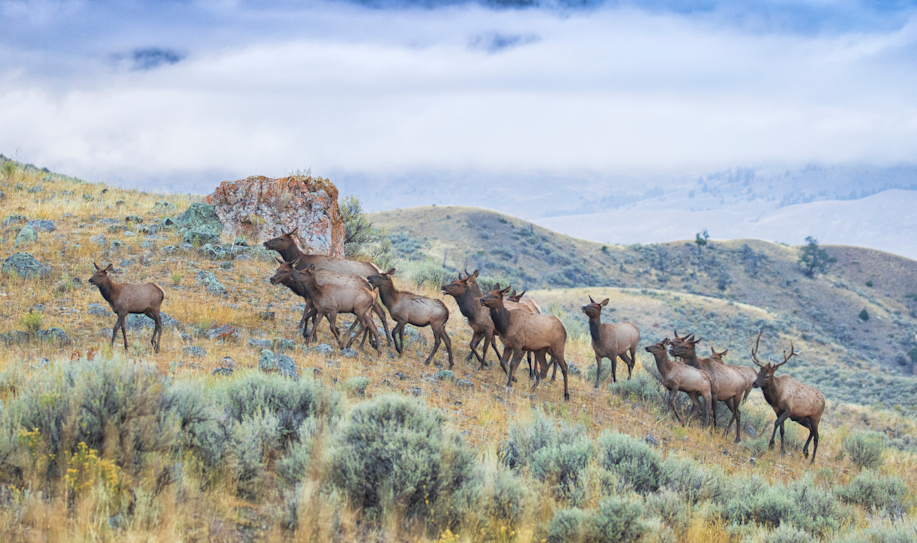
A new version of the “Habitat Connectivity Act”—formally introduced as the Habitat Connectivity on Working Lands Act of 2026—is now moving through Congress, and it carries direct implications for big game hunters across the West and beyond.
The bill was introduced in the U.S. Senate on March 12, 2026, by Martin Heinrich (D-N.M.) and Tim Sheehy (R-Mont.), making it a bipartisan effort from the start.
A companion version has also been introduced in the House, led by Gabe Vasquez and Ryan Zinke—another bipartisan pairing that signals broader political appeal.
What the Bill Actually Does
At its core, the legislation amends the long-standing Food Security Act of 1985 to prioritize wildlife habitat connectivity—especially for migratory big game like deer, elk, and pronghorn.
The bill focuses heavily on private and working lands, which is a key detail for hunters. Instead of locking up land, it expands voluntary conservation programs through the U.S. Department of Agriculture—including incentives, cost-sharing, and technical assistance for landowners who improve habitat and migration corridors.
It also builds on the USDA’s Migratory Big Game Initiative, which has already been active in states like Wyoming, Montana, and Idaho—areas critical to Western hunting traditions.
Why This Matters for Hunters
From a hunting perspective, the bill is less about restrictions and more about long-term herd sustainability:
- Healthier herds: Better migration routes mean improved survival rates and population stability.
- More consistent hunting opportunity: Stronger herds typically lead to more tags and better age-class structure.
- Shifting game patterns: As corridors are restored, animals may return to historic routes—potentially changing where hunters find success.
- Private land partnerships: Because much of this work happens on ranchland, access could either improve (via partnerships) or become more structured depending on agreements.
The inclusion of tools like virtual fencing and grazing management incentives also highlights a growing intersection between ranching and wildlife—something hunters will increasingly see on the ground.
Where the Bill Stands Now
As of now, the bill has been introduced and referred to the Senate Committee on Agriculture, Nutrition, and Forestry, which is the first major hurdle in the legislative process.
No votes have occurred yet in either chamber.
Chances of Passing
The outlook is cautiously favorable—but far from guaranteed:
Factors helping the bill:
- Strong bipartisan sponsorship in both Senate and House
- Alignment with existing federal programs (not a brand-new bureaucracy)
- Support from conservation groups and hunting organizations
- Focus on voluntary, incentive-based approaches rather than mandates
Potential challenges:
- Competition with larger legislation like the Farm Bill, where this could be folded in—or sidelined
- Budget concerns tied to conservation funding expansions
- Regional differences over land use priorities
In reality, bills like this often move forward as part of larger packages, especially agriculture or conservation funding bills. Standalone passage is less common.
Bottom Line for Hunters
The Habitat Connectivity Act is one of the more hunter-relevant conservation bills currently in play—not because it changes seasons or regulations directly, but because it targets the foundation of hunting itself: healthy, mobile wildlife populations.
If it advances, expect to see its effects play out gradually—through better migration corridors, improved habitat on private lands, and ultimately, more resilient big game herds.
For hunters willing to adapt to shifting movement patterns and engage with evolving access opportunities, this is a development worth watching closely.