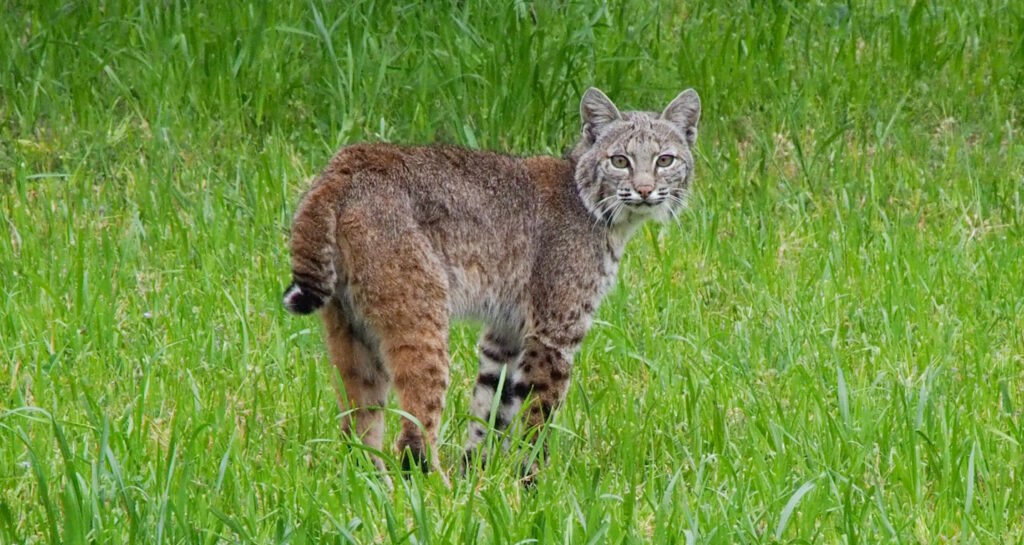
CDFW estimates more than 62,000 bobcats statewide as California reaches a key step required before a future hunting season could be considered
The California Department of Fish and Wildlife (CDFW) released its long-awaited Draft California Bobcat Conservation and Management Plan on October 1, 2026, opening a 30-day public comment period on the state’s first comprehensive management plan for the species.
For hunters, the significance goes beyond another wildlife management document. Development of the plan was required under Assembly Bill 1254, the legislation that ended recreational bobcat hunting in California beginning in 2020. Completion of a management plan based on current science is one of the steps required before California could consider allowing bobcat hunting again.
That does not mean bobcat hunting is returning now. CDFW specifically notes that only the California Fish and Game Commission has authority to reinstate a bobcat hunting season. The new plan instead provides the scientific information and potential management options that could inform such a decision in the future.
California Estimates More Than 62,000 Bobcats
The draft plan follows the completion of CDFW’s five-year California Bobcat Population Monitoring Project, which produced the most comprehensive statewide bobcat survey California has conducted.
CDFW estimates that California currently has more than 62,000 bobcats, with the statewide population considered stable. Bobcats were found across most of California, except major urban areas and portions of the Central Valley dominated by intensive agriculture.
The estimate is notable when compared with earlier CDFW figures. Previous studies estimated approximately 61,000 bobcats in the 1970s and 74,000 in the early 1980s, although CDFW cautions that those older estimates were produced using considerably less rigorous methods.
The new research used tools including GPS satellite collars, DNA analysis, trail cameras and necropsies to evaluate population size, distribution and health. Researchers also found that bobcats were more common at higher elevations than expected, while lower densities were observed in areas affected by major wildfire scars.
Why California Stopped Bobcat Hunting
California had regulated bobcat harvest for decades before AB 1254 was enacted in 2019 and took effect in 2020. The law prohibited hunting, trapping or otherwise taking bobcats except under limited circumstances, including certain depredation situations.
But the legislation did not simply declare that recreational bobcat hunting could never return. It directed CDFW to conduct new research and develop a science-based conservation and management plan that could inform future management decisions.
CDFW says the resulting 133-page draft plan addresses bobcat biology and ecology, historical management, Tribal perspectives and potential future management strategies. The underlying population research also examined issues such as habitat connectivity, disease and the potential effects of different management scenarios.
Does This Mean Bobcat Hunting Could Return?
Potentially—but there is currently no reopened bobcat season and no decision to create one.
CDFW’s release of the management plan removes an important informational hurdle because California now has substantially more detailed population data available to wildlife managers. However, CDFW itself cannot simply reopen a hunting season.
The California Fish and Game Commission would have to make that decision. The Commission could use the new population research and management plan when considering whether a regulated bobcat season is appropriate and, if so, what restrictions would be necessary.
Any future proposal could therefore involve additional regulatory proceedings and public participation. Questions such as hunting zones, quotas, season dates, allowable methods and reporting requirements would have to be addressed if California ever moves toward reinstating recreational take.
For now, California hunters should continue to treat bobcats as closed to recreational hunting and trapping.
What Is Affecting California Bobcats?
CDFW’s research found that the statewide population appears stable, but conditions can differ substantially at the local level.
The draft plan identifies vehicle strikes and disease, particularly mange, among the leading documented causes of bobcat mortality, although CDFW cautions that these causes may be overrepresented because those deaths are easier for researchers to detect. Habitat fragmentation and other human impacts also remain important management considerations.
CDFW’s population study also found reduced bobcat densities in areas affected by large wildfire scars. Severe fires can temporarily create extensive areas with limited suitable bobcat habitat.
Hunters Can Comment Through November 1
CDFW is accepting public comments on the draft plan through November 1, 2026.
Comments may be emailed to wildlifemgt@wildlife.ca.gov, with “California Bobcat Conservation and Management Plan” in the subject line. Written comments can also be mailed to CDFW’s Wildlife Branch in Sacramento.
The public-comment process gives hunters, conservation organizations, wildlife advocates and other Californians an opportunity to weigh in on how the state should manage bobcats going forward.
What Comes Next?
The immediate next step is completion of the public and Tribal review process and development of the final management plan. What happens after that will be particularly important for California hunters.
The state’s new research establishes something California did not have when bobcat hunting was prohibited: a modern, extensive scientific assessment of the population. With more than 62,000 bobcats estimated statewide and the overall population described as stable, the Fish and Game Commission will have new information available if it considers future changes to bobcat regulations.
Whether that eventually leads to a carefully regulated hunting season remains a separate policy and regulatory question. For now, the release of the draft plan represents an important milestone in that process—not the return of bobcat hunting itself.
Follow California Hunting Regulations with Hunterizer
California hunting regulations can change significantly from one species, zone and season to another. Hunterizer helps hunters determine what they can legally hunt at their location on a particular date, with information on season dates, hunting zones, legal weapons, bag limits, shooting hours and other important regulations.
Bobcat hunting remains closed in California today. If that changes in the future, Hunterizer will work to keep California hunters informed as new regulations and opportunities are adopted. Until then, hunters can use Hunterizer to keep track of the many other hunting seasons currently open across the state.
Draft California Bobcat Conservation and Management Plan (PDF): https://nrm.dfg.ca.gov/FileHandler.ashx?DocumentID=247441&inline
CDFW announcement: https://wildlife.ca.gov/News/Archive/cdfw-seeks-public-comment-on-draft-bobcat-conservation-plan