Wisconsin bear hunters, the wait is over. The Wisconsin Department of Natural Resources has officially released the 2026 black bear permit drawing results, and successful applicants are already seeing updates in their Go Wild accounts. If you applied for a Class A bear license or were in for a preference point, now is the time to log in and confirm your status.
The drawing determines who is authorized to purchase a Class A bear harvest permit, and once selected, your preference points reset to zero-whether you end up hunting or not. Notifications are sent by email or postcard, but the DNR reminds hunters that checking online is the fastest and most reliable way to see results.
What the 2026 Drawing Numbers Tell Us
This year’s drawing once again highlights just how competitive bear hunting has become in Wisconsin.
Full statistics as released by Wisconsin DNR is available at the link or at the bottom of this page.
A total of 140,416 applications were submitted statewide. Of those, 105,853 hunters applied for preference points only, choosing to build points rather than risk drawing early. In the end, 14,932 bear permits were awarded across all six bear management zones.
Some zones were significantly harder to draw than others:
- Zones A and B remained the toughest, requiring 11 preference points just to be eligible. Even then, not everyone with minimum points drew a tag.
- Zones C and D were drawn at lower thresholds, with a minimum of 2 points, but odds still hovered around the 55-61% range.
- Zones E and F were the most forgiving in 2026, requiring only 1 point, and 100% of applicants with the minimum points successfully drew permits.
In practical terms, this means hunters sitting on high point totals for northern zones are still facing stiff competition, while those targeting southern or fringe bear zones may finally be catching a break.
Resident vs. Nonresident Results
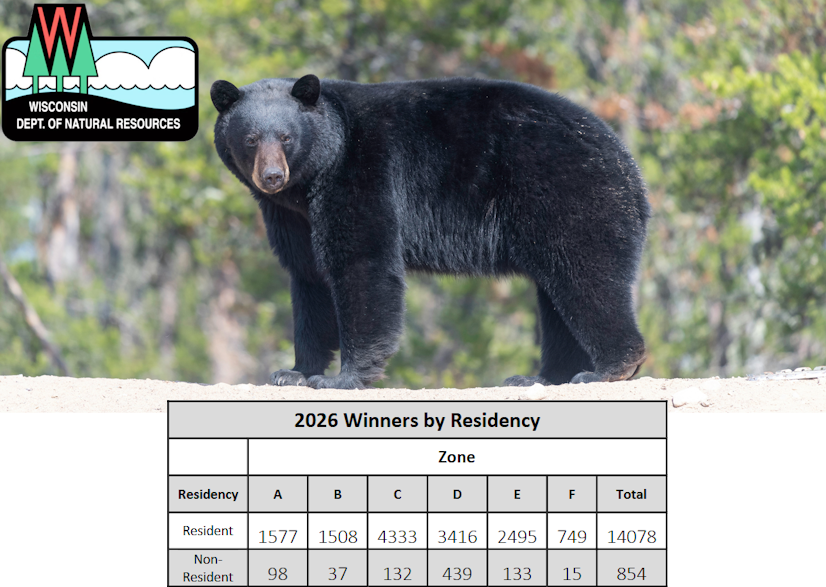
Wisconsin residents continued to dominate the permit pool, accounting for 14,078 of the 14,932 permits issued. Nonresidents received 854 permits statewide, with most concentrated in Zones C and D. As always, residents and nonresidents are treated equally in the drawing, but sheer volume keeps resident numbers higher.
What Hunters Should Do Next
If you were successful:
- Log into your Go Wild account and complete your Class A license purchase.
- Double-check your zone and season details.
- Start lining up baiting plans, land access, and scouting.
If you didn’t draw:
- You should see one additional preference point added to your total.
- Remember, you must apply at least once every three years to avoid losing accumulated points.
- Consider whether a preference point-only application makes sense for next season.
Group applicants should also confirm results together, since all members share the same outcome based on the lowest point total in the group.
A Reminder on Transfers and Special Options
Hunters who drew a permit but can’t hunt still have options. Wisconsin allows awarded permit transfers to qualified individuals under specific rules, and special provisions exist for family members in the event of a deceased applicant. These transfers can make the difference for hunters who were just short in the drawing.
Bottom Line
Bear hunting interest in Wisconsin continues to climb, and the 2026 drawing results reinforce one thing: preference points matter more than ever, especially in Zones A and B. Whether you’re celebrating a hard-earned tag or adding another point to the bank, now is the moment to plan ahead.
Hunters can view full zone-by-zone statistics and drawing summaries on the Wisconsin DNR bear hunting page-and should check their Go Wild accounts as soon as possible.

Hunterizer App
Hunting See exactly what’s in season at your GPS location.
The Hunterizer app shows species, bag limits, and zone rules for your exact coordinates — for every county in Wisconsin.