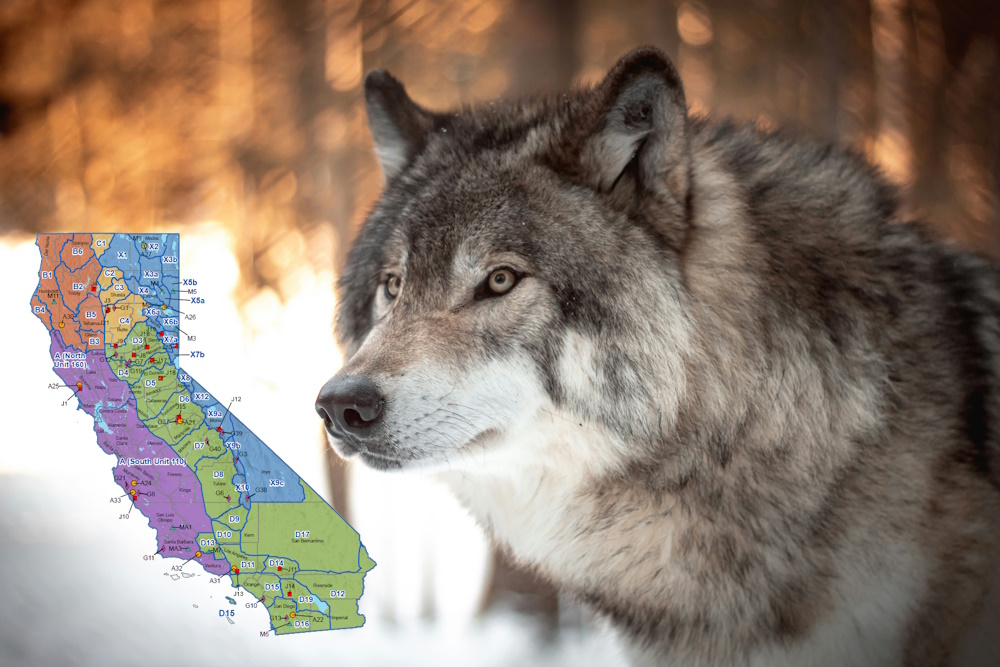
New 2026 Report Confirms Ongoing Wolf Expansion
The California Department of Fish and Wildlife (CDFW) has released its updated 2026 Wolf-Livestock Depredation Investigations and Determinations report, documenting confirmed wolf attacks on livestock across Northern and Sierra Nevada counties.
Each reported livestock death is investigated using physical evidence, tracks, carcass condition, and GPS collar data when available. Final determinations are categorized as confirmed, probable, possible, non-wolf, or unknown.
The report continues to serve as one of the most reliable indicators of where wolves are expanding—and where hunters should expect changing deer behavior.
Year-Over-Year Wolf Population Growth
California’s wolf population remains relatively small compared to neighboring states, but growth continues steadily.
Estimated California Wolf Population by Year:
- 2021, ~20–25 wolves, 2–3 packs, Early recovery phase
- 2022, ~30–35 wolves, 4–5 packs, Pack expansion begins
- 2023, ~49 wolves, ~7 packs, Rapid pack growth
- 2024, 50+ wolves, 7 established packs + activity areas, Confirmed statewide estimate
- 2025–2026, ~65–70 wolves (estimated), ~9–10 packs, Expansion continues into Sierra Nevada
At the end of 2024, CDFW documented at least 50 wolves statewide, confirming steady population growth since wolves returned to California in 2011. Recent monitoring data and dispersal sightings suggest that by 2026, California likely supports around 65–70 wolves, with new territories continuing to form. California currently has nine confirmed wolf packs, mostly concentrated in northeastern California, with one established pack in the southern Sierra.
Year-Over-Year Depredation Growth
Wolf depredation events have also increased as wolf numbers grow.
Confirmed Wolf Livestock Depredations by Year:
- 2020, 1–2, Early incidents
- 2021, 4–5, First repeated events
- 2022, ~10, Pack expansion phase
- 2023, 21 confirmed, Significant increase
- 2024, ~30+ confirmed, Continued growth
- 2025, 40+ confirmed, Highest recorded levels
- 2026, (partial year), Ongoing investigations, Numbers still rising
CDFW confirmed 21 wolf depredations in 2023, showing continued conflict growth as wolves expand into livestock areas. Reports from 2024–2025 indicate continued increases in livestock losses, corresponding with new pack formation and territorial expansion. The 2026 report shows that investigations are ongoing throughout the year, suggesting numbers will likely increase further as wolf populations expand.
Counties With Confirmed Wolf Activity
The majority of wolf activity remains concentrated in Northern California and the Sierra Nevada.
Primary Counties With Wolf Presence:
- Siskiyou County
- Modoc County
- Lassen County
- Shasta County
- Tehama County
- Plumas County
- Sierra County
- Tulare County
- Kern County (emerging presence)
Most established wolf packs are located in northeastern California, although new dispersal wolves have moved into the southern Sierra and even briefly into Southern California.
Deer Hunting Zones With Wolf Overlap
For hunters, deer zone overlap is one of the most important takeaways from the report.
Highest Overlap — Northeastern Mule Deer Zones
These zones contain the strongest and longest wolf presence:
- X zones: X1, X2, X3A, X3B, X4, X5A, X5B, X6A, X6B
- C1, C2, C3, C4 zones
Primary Counties:
- Modoc
- Lassen
- Plumas
- Sierra
- Eastern Shasta
These zones contain core wolf pack territory and represent the highest likelihood of hunter-wolf overlap.
Northern California Blacktail Zones
Wolf expansion continues into northern coastal ranges:
- B zones: B1, B2, B3, B5, B6
Primary Counties:
- Siskiyou
- Shasta
- Tehama
- Trinity (possible expansion)
These areas represent major migration and dispersal routes.
Southern Sierra Emerging Zones
Recent wolf activity makes these zones increasingly important.
- D Zones: D7, D8, D9, Portions of D10
Primary Counties:
- Tulare
- Kern
The Yowlumni Pack has established territory in this region, marking California’s southernmost wolf population.
What This Means for Deer Hunters
Although the report focuses on livestock losses, its implications for deer hunters are significant.
Changing Deer Behavior
Hunters in wolf areas often report:
- Reduced daytime movement
- Increased use of heavy cover
- Smaller herd grouping
- Changes in migration timing
These behavioral shifts can make deer harder to locate and harvest.
Potential Impact on Fawn Survival
Research across western states shows that expanding wolf populations can reduce fawn survival rates in some areas, especially during early colonization phases. California wildlife managers continue to monitor these effects as wolf populations grow.
Expect Expansion Into New Zones
The long-term trend is clear:
- More wolves
- More packs
- More deer zone overlap
California currently supports about nine confirmed packs, but habitat modeling suggests the state could eventually support hundreds of wolves across suitable range.
What Hunters Should Watch Next
Key indicators hunters should monitor include:
- Annual wolf depredation totals
- New pack confirmations
- Dispersal sightings
- Deer herd performance trends
- Future wolf management policy discussions
These developments will likely influence long-term deer hunting success across multiple California zones.
Bottom Line for Hunters
The 2026 CDFW wolf depredation report confirms two clear trends:
- Wolf populations are increasing year-over-year
- Livestock depredation incidents are rising alongside wolf expansion
For hunters in X-zones, B-zones, C-zones and Sierra D-zones, wolves are no longer a future issue—they are becoming a present-day factor affecting deer behavior, hunting strategy, and long-term herd dynamics.
Full CDFW report can be downloaded here:
https://nrm.dfg.ca.gov/FileHandler.ashx?DocumentID=243901