The long-running legal fight over corner crossing — a critical public-land access issue for Western hunters — has reached a major milestone. The U.S. Supreme Court has declined to hear an appeal challenging a federal court ruling that allows hunters to legally cross between adjacent corners of public land without stepping onto private property.
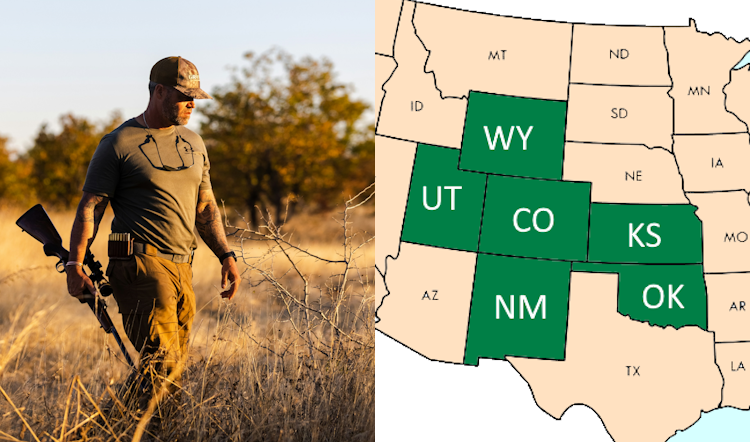
By passing on the case, the Supreme Court leaves intact a 10th Circuit Court of Appeals decision that affects six states: Wyoming, Colorado, Utah, New Mexico, Kansas, and Oklahoma. For hunters, that means corner crossing remains lawful within those states — preserving access to millions of acres of landlocked public ground.
How the Case Started
The case stemmed from a dispute in southern Wyoming, where checkerboard land ownership patterns — alternating public and private parcels — have long limited access to otherwise open public land. In 2021, four out-of-state hunters crossed from one parcel of Bureau of Land Management land to another by stepping directly over the shared corner point, without touching the private land beneath it.
The private landowner argued that crossing through the airspace above the corner constituted trespass and pursued both criminal complaints and a civil lawsuit. While the hunters were acquitted of criminal charges, the civil case moved into federal court, where the broader question of public land access took center stage.
What the 10th Circuit Decided
In 2024, the 10th Circuit Court of Appeals ruled in favor of the hunters, finding that corner crossing — when done without physically entering private land or damaging fences — does not violate federal trespass law. The court relied in part on the Unlawful Inclosures Act of 1885, a law designed to prevent private landowners from blocking lawful access to public lands.
The ruling effectively affirmed that hunters and other public land users can move between public parcels at a shared corner, even if private land lies diagonally beneath that point.
Supreme Court Declines the Appeal
The landowner asked the U.S. Supreme Court to review the decision, but in late 2025 the Court declined to take the case. While the move doesn’t create a nationwide rule, it solidifies the 10th Circuit’s interpretation as binding law within its jurisdiction.
For hunters, that’s a significant outcome. The decision keeps access open across large swaths of the West where checkerboard ownership has historically locked up public elk, mule deer, pronghorn, and upland habitat.
What This Means for Hunters on the Ground
Corner crossing is legal in the 10th Circuit states — but only if done carefully. Hunters must avoid touching private land, crossing fences, or damaging property. GPS accuracy, on-the-ground survey markers, and situational awareness all matter, especially in remote areas where corners aren’t clearly marked.
It’s also worth noting that the ruling does not apply everywhere. States outside the 10th Circuit may interpret corner crossing differently under state law, and hunters traveling across state lines should verify local regulations before assuming access is legal.
Access Preserved — For Now
The Supreme Court’s decision not to intervene marks a major win for public land access advocates and hunters alike, but it may not be the final word. Future cases, legislation, or state-level enforcement actions could still shape how corner crossing is handled elsewhere.
For now, hunters across the 10th Circuit can plan their seasons knowing that a key access route to public land remains open — as long as it’s used responsibly and legally.
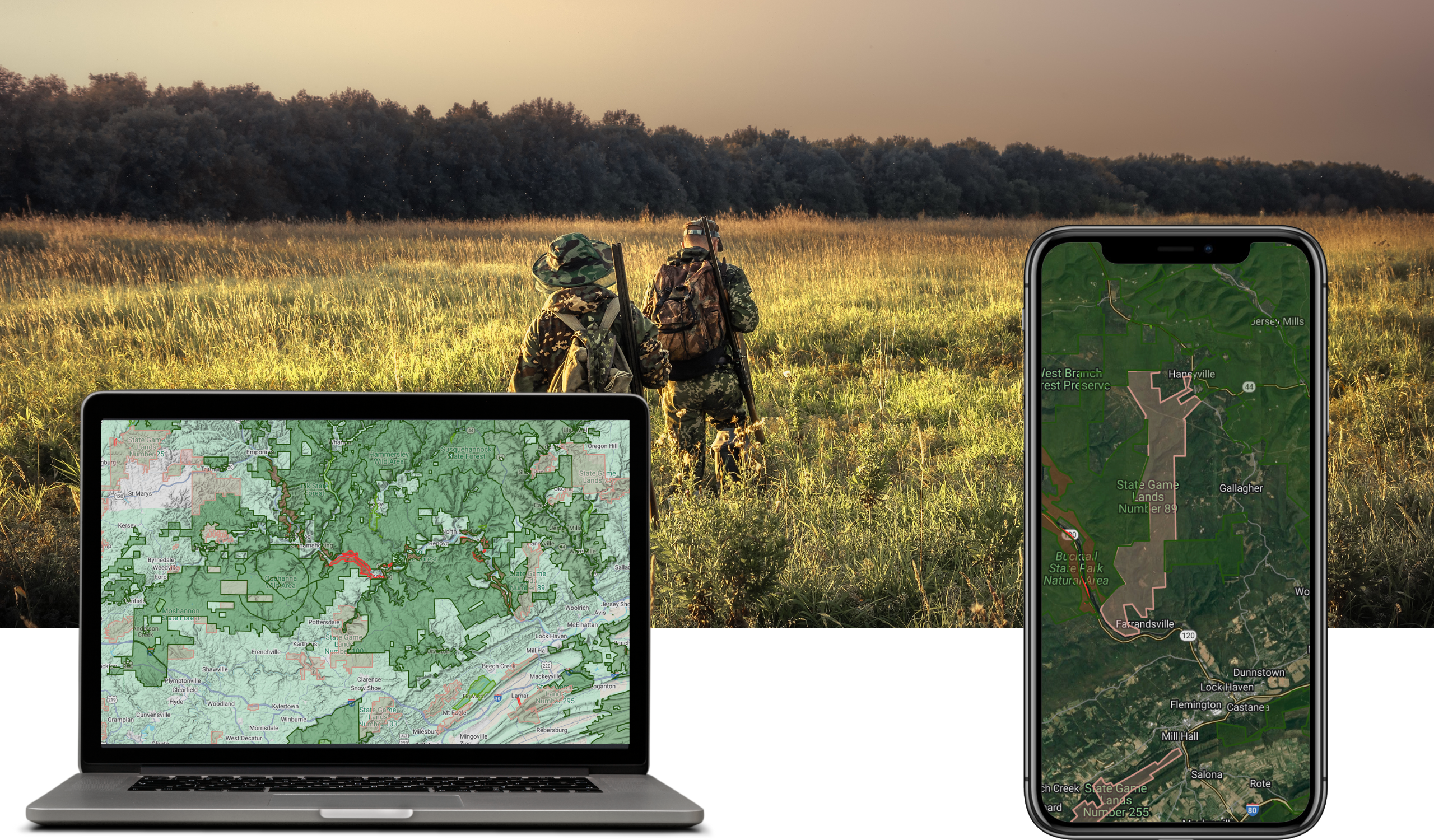
Hunters looking to stay current on access rules, season dates, and land boundaries can use Hunterizer as a convenient way to check regulations and plan hunts with confidence across state lines.