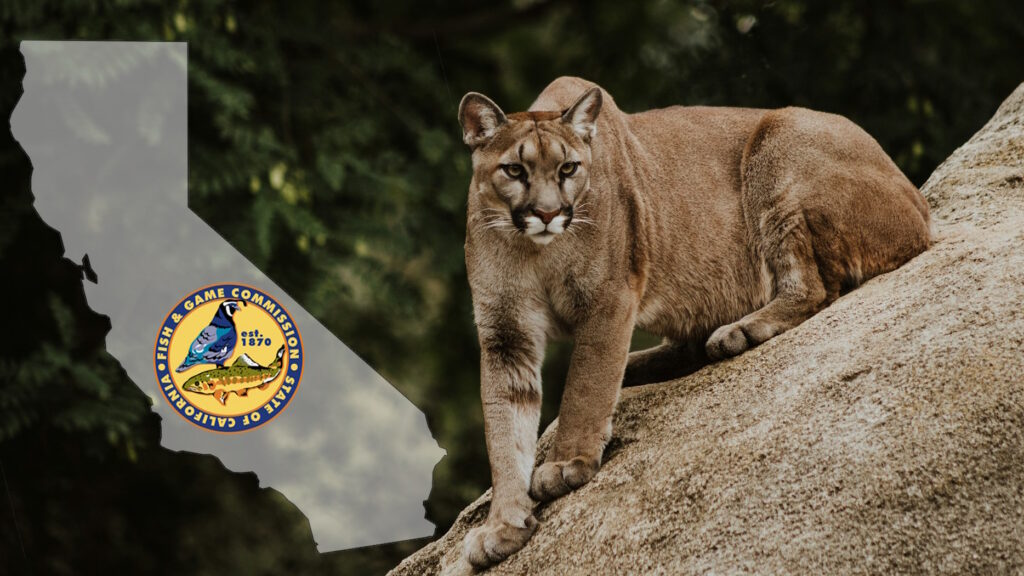
SACRAMENTO, CA — February 13, 2026 — The California Fish and Game Commission has taken a landmark step for wildlife management this week, voting unanimously to list several mountain lion populations under the California Endangered Species Act (CESA) as threatened species. The Feb. 11–12 meeting in Sacramento wrapped up with this decision that will have ripple effects for habitat protection, development permitting, and — indirectly — game populations across much of the state.
Official meeting details and documents from the Commission are available here:
California Fish and Game Commission — Feb. 11–12 2026 Meeting Agenda & Docs
Which Mountain Lions Are Now Listed — and Which Are Not
The listing focuses on six distinct mountain lion populations primarily in Central and Southern California — regions where habitat is fragmented by urban development and freeways:
- Santa Cruz Mountains
- Central Coast ranges
- Santa Monica Mountains
- San Gabriel & San Bernardino Mountains
- Santa Ana Mountains
- Eastern Peninsular Ranges
Together, these groups make up an estimated ~1,400 cats that state wildlife officials say are at risk due to isolation, inbreeding, vehicular mortality, rat poison exposure, and wildfire pressures.
In contrast, mountain lions in Northern California and the Sierra Nevada foothills — representing the majority of the state’s estimated 4,500 to 6,000 lions — were not included in the listing. The Commission determined these populations occupy larger, more connected landscapes with stronger gene flow and fewer immediate fragmentation pressures compared to their Southern and Central Coast counterparts.
What “Threatened” Status Means in Practice
Under California law, “threatened species” status triggers several protections:
- State agencies must evaluate and avoid impacts to the cats and their habitat under CESA.
- Developers, counties, and transportation projects must consider effects on lion movement and habitat connectivity when planning.
- Killing, harming, or harassing listed mountain lions without a permit becomes a CESA violation.
Importantly for hunters, this designation does not reinstate sport hunting (which is already prohibited) nor does it change existing wildlife feeding or depredation rules (those are governed by other Fish & Game Code sections).
However, it adds a layer of legal consideration for proposed roads, subdivisions, and other habitat-altering projects in lion territory — particularly in Southern and Central California.
Reactions from Hunters, Ranchers, and Conservationists
Conservation groups praised the decision as a necessary step to keep mountain lions from slipping toward endangerment. Advocates say the listing will catalyze more wildlife crossings, connectivity planning, and funding for long-term recovery efforts.
“This is a major milestone for California’s iconic big cats,” said a representative from the Center for Biological Diversity, which originally petitioned for protection back in 2019.
By contrast, livestock producers and hunting organizations have expressed frustration:
- Ranchers fear added restrictions when dealing with lions that prey on livestock.
- The California Deer Association and archery groups voiced concerns that new protections could limit wildlife managers’ ability to address depredation or problem individuals.
Some hunters also point out that mountain lions play a role in predator-prey dynamics — especially where deer populations fluctuate — and that excluding effective management tools could have knock-on effects for deer and trophy game herds. Fierce debate at the meeting included arguments that lions may increase predation pressure where deer numbers are already low.
What This Means for Deer, Elk, and Other Game
Mountain lions are apex predators — their presence influences deer, elk, and even feral hog behavior and distribution. In areas where lions are listed as threatened:
- Habitat protections may slow or alter land development, potentially benefiting broader wildlife communities.
- Managers may have stricter requirements when removing problem lions, which could lead to more non-lethal conflict mitigation before lethal removal.
- If lion densities remain stable or grow where habitat connectivity improves, deer hunters could see subtle changes in deer behavior or survival in certain regions.
In the Northern Sierra and northeastern California, where lions were not listed, existing predator-prey dynamics and management practices will largely remain unchanged for the time being.
Other Topics Covered at the Commission Meeting
In addition to the mountain lion decision, the Commission heard reports and took action on several other wildlife and hunting issues:
- Reports on necropsies for wildlife taken under depredation permits, including mountain lions.
- Discussions on pronghorn antelope, elk, and black bear hunting regulations — though no sweeping changes were announced at this session.
- Updates on petitions to consider listings for other species under CESA, such as spadefoot toads and thrasher birds, slated for future meetings.
Bottom Line for California Hunters
This week’s ruling reinforces California’s complex approach to wildlife management — balancing imperiled predators with game species and land use. While it doesn’t directly change hunting seasons this year, it does set the stage for:
- Continued advocacy around predator regulation in fragmented landscapes;
- Increased habitat preservation efforts that could benefit deer and elk over time;
- More public involvement as CESA protections influence local planning and wildlife-related permitting.
Keep an eye on future FGC meetings and CDFW reports — especially with the May and August 2026 Commission sessions approaching — for follow-ups on how this new mountain lion status plays out on the ground.
Hunterizer App
Know exactly what you can hunt — today, at your location.
Hunting season dates, bag limits, and regulations for 11 states: CA, GA, ID, MI, MT, NY, PA, TN, TX, WA, and WI.