Washington hunters have spent years questioning the direction of the Washington Fish and Wildlife Commission, particularly on controversial issues such as spring bear hunting, predator management and the role hunting should play in wildlife conservation. Now, an independent investigation commissioned by Gov. Bob Ferguson has documented serious problems involving several commissioners, including private coordination on commission business, failures to properly handle public records, and extensive contacts with outside wildlife advocacy organizations.
The investigation, released July 31, examined allegations involving Commissioners Barbara Baker, John Lehmkuhl, Melanie Rowland and Lorna Smith, as well as former Commissioner Tim Ragen. Four of the five broad allegations examined by the investigator were substantiated at least in part. At the same time, the report stopped short of substantiating some of the most serious accusations and did not recommend removal or criminal prosecution of commissioners.
For hunters, however, some of the underlying evidence is particularly noteworthy because it provides a much clearer picture of how commissioners were communicating with one another — and with outside organizations — away from formal commission meetings.
The Commission’s “Gang of Four”
One of the most striking findings involves what commissioners themselves reportedly called the “Gang of Four.” According to the investigation, multiple commissioners acknowledged frequent communications among a group of four commissioners concerning substantive commission business. Commissioner Melanie Rowland confirmed that the group used the “Gang of Four” name.
Those discussions weren’t limited to casually exchanging information. The investigation found communications concerning the spring bear hunt, conservation-policy development, the vice-chair election and drafting motions. Commissioners discussed how motions should be structured, anticipated voting outcomes and coordinated support for commission leadership before matters reached public meetings. In one instance involving spring bear hunting, the investigator found that four commissioners reached agreement on the substance of a motion before the language was transmitted to Chair Barbara Baker, effectively extending the discussion to a fifth commissioner before the issue reached a public meeting.
That distinction matters because Washington’s Open Public Meetings Act exists to ensure that government decisions are made through a process the public can observe. The investigation concluded that evidence supported violations involving this type of behind-the-scenes coordination. For hunters who watched controversial wildlife decisions unfold during public commission meetings, the findings raise an obvious concern: some important discussions and coordination may already have occurred before commissioners appeared at the public meeting to debate and vote.
Communications With Groups Frequently Opposed to Hunting Interests
The investigation also examined commissioners’ relationships with outside wildlife advocacy organizations, including Washington Wildlife First, Wild Fish Conservancy and The Conservation Angler. These organizations are often described by hunting advocates as anti-hunting or preservationist groups because they have supported wildlife-management positions that conflict with those favored by hunting organizations. It is more precise, however, to describe them as wildlife, predator or wild-fish advocacy organizations and then examine their positions on individual hunting issues rather than assume that every activity of each organization is anti-hunting.
What is significant is the extent of the contact documented by the investigation. The report found “regular contact” between certain commissioners and outside advocacy organizations, including organizations that were involved in litigation against WDFW, with contacts occurring in some cases shortly before or after commission meetings. According to reporting on the investigation, Smith appeared in 40 such meetings over a three-year period, Rowland in 37 and Lehmkuhl in 28.
The investigation also examined communications involving Washington Wildlife First Director Claire Davis. Emails were sent to personal addresses belonging to commissioners while litigation involving the organization was active. Importantly, the investigator found no evidence that commissioners responded to Davis or engaged with her on the substance of those particular communications. That limitation matters: evidence of contact does not by itself prove that an advocacy organization dictated a commissioner’s vote or secretly wrote Washington hunting regulations.
Still, the documented relationships are relevant to hunters because commissioners were simultaneously dealing with some of Washington’s most contentious wildlife-management questions. The concern raised by hunting organizations is not simply that commissioners talked to people who disagree with hunters — commissioners should hear from many constituencies — but whether some outside organizations enjoyed a level of private access and communication that wasn’t transparent to hunters and the broader public.
Spring Bear Hunt Is an Important Part of the Story
The controversy surrounding Washington’s spring black bear hunt illustrates why these communications matter. Washington had long offered a limited-entry spring bear hunting opportunity, but in November 2021 the commission split 4-4 on approving the 2022 season, preventing it from moving forward. The commission subsequently continued the suspension, turning spring bear into one of the defining controversies surrounding the commission.
The new investigation provides additional context for what was happening behind the scenes. It found communications among commissioners concerning the spring bear hunt and motion drafting. One public-records issue involved a text related to a spring bear vote that took months to produce after a records request. According to the investigation, language from that communication was incorporated into a motion in a way that effectively left the closure of the hunt open-ended rather than limiting it to a single season.
None of this proves that an outside anti-hunting organization secretly ordered the commission to eliminate the spring bear hunt. But the documented private coordination makes the transparency question much harder to dismiss, particularly given how consequential the spring bear decision became for Washington hunters.
Public Records Were Another Major Problem
The investigation’s findings concerning public records are equally significant. Commissioners conducted commission business using personal devices, failed in some cases to conduct complete searches for responsive records and submitted declarations that the investigation found inaccurate or incomplete. The investigator also found instances of resistance to producing records until commissioners were compelled to do so.
One example involved Rowland and a text associated with the spring bear issue. The investigation found that it took months to produce the message even though a public-records request had been submitted immediately after the communication was referenced during a public meeting. These findings are especially important because private emails and text messages can become the only way for hunters and other members of the public to understand what happened outside an official commission meeting.
In other words, the controversy isn’t simply about whether commissioners favored hunters, predators or environmental organizations. It is also about whether Washington residents were given the transparency required when public officials conduct state business.
Sportsmen’s Alliance Calls for Four Commissioners to Be Removed
Sportsmen’s Alliance had previously obtained commission records and petitioned the governor to remove Baker, Lehmkuhl, Rowland and Smith. Following release of the investigation, the organization argued that the findings validated the central allegations behind its petition and renewed its call for Gov. Ferguson to remove the commissioners.
That is Sportsmen’s Alliance’s interpretation of the report, however, rather than the investigator’s recommendation. The investigation did not recommend that the four commissioners be removed, nor did it conclude that every allegation made against them had been proven. The report instead recommended additional training and compliance measures and left potential corrective action to the appropriate state authorities.
What Happens to the Commission Now?
The ultimate political question belongs largely to Gov. Ferguson. Washington’s governor appoints the nine members of the Fish and Wildlife Commission, subject to Senate confirmation, and the commission has broad authority to establish policies and regulations governing fish and wildlife in the state.
The timing is particularly important because Smith, Lehmkuhl and Rowland have terms scheduled to expire December 31, 2026. Baker’s current term runs through 2028. Ferguson therefore faces decisions about the commission’s composition even without taking the extraordinary step of removing sitting commissioners.
Ferguson has already demonstrated a willingness to change the commission’s direction. In 2025, he asked the state Senate to return two pending appointments made by former Gov. Jay Inslee and subsequently appointed Victor Garcia while reappointing Molly Linville and Jim Anderson. At the time, Ferguson specifically cited concerns raised in an earlier Ruckelshaus Center report that described the commission as politically polarized and dysfunctional.
Why This Matters to Washington Hunters
Washington’s Fish and Wildlife Commission isn’t an advisory club. It establishes policies and regulations affecting the state’s fish and wildlife resources, while WDFW implements those policies. Decisions made at the commission level can ultimately affect hunting seasons, predator management, hunting methods and opportunities available to hunters across Washington.
Hunters should therefore be able to expect that major wildlife-policy debates occur through a transparent public process. Commissioners are free to speak with wildlife advocates, hunters, conservation organizations, tribes and other interested parties, and hearing competing viewpoints is part of governing. The problem arises when substantive commission business is coordinated outside public meetings or when private communications relevant to government decisions aren’t properly disclosed through public-records requests.
The investigation does not prove the broadest allegation now circulating on social media — that “anti-hunters were secretly making Washington’s hunting rules.” What it does establish is serious enough without that exaggeration: commissioners coordinated substantive commission matters outside public meetings, had extensive contacts with outside advocacy organizations frequently opposed by hunting interests, and in some cases failed to properly preserve, search for or disclose records of commission business.
For Washington hunters who have questioned the commission’s direction for years, those findings make transparency, commission appointments and the future makeup of the Fish and Wildlife Commission issues worth watching closely.
Hunterizer Keeps Washington Hunters Current as Regulations Change
Political battles over wildlife management eventually have practical consequences: the seasons, boundaries and regulations hunters have to follow in the field.
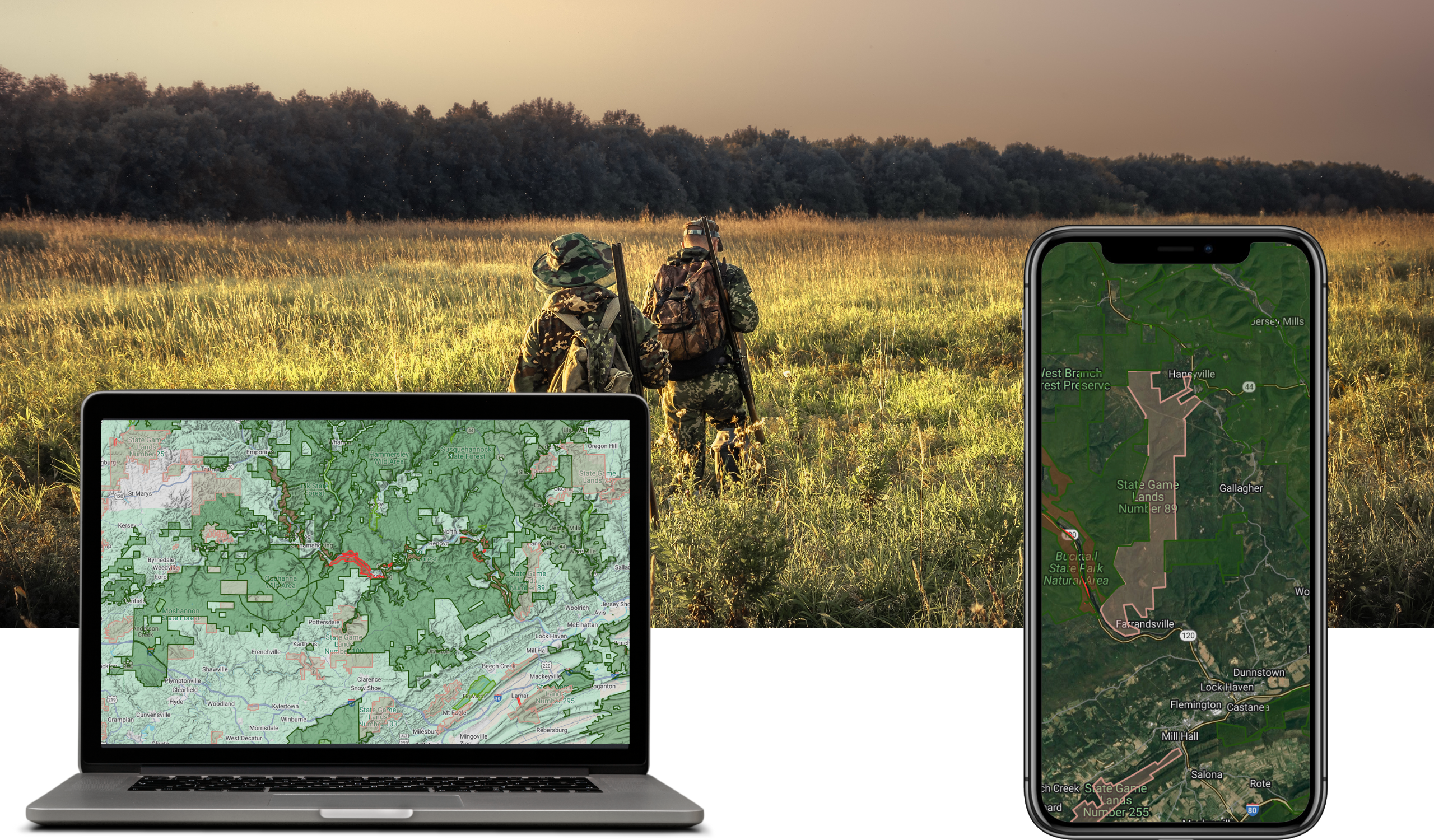
The Hunterizer app helps Washington hunters navigate those rules by showing seasons, regulations, hunting zones and what species can legally be hunted at a particular location and time. Hunterizer has updated Washington information for the 2026–27 hunting seasons, including Big Game, Waterfowl, Upland Birds, Small Mammals, Furbearers and other huntable species.
Whatever direction Washington wildlife policy takes next, hunters still need to know exactly what the current rules allow. Hunterizer turns those regulations into practical information hunters can use when planning a hunt and when they’re actually in the field.