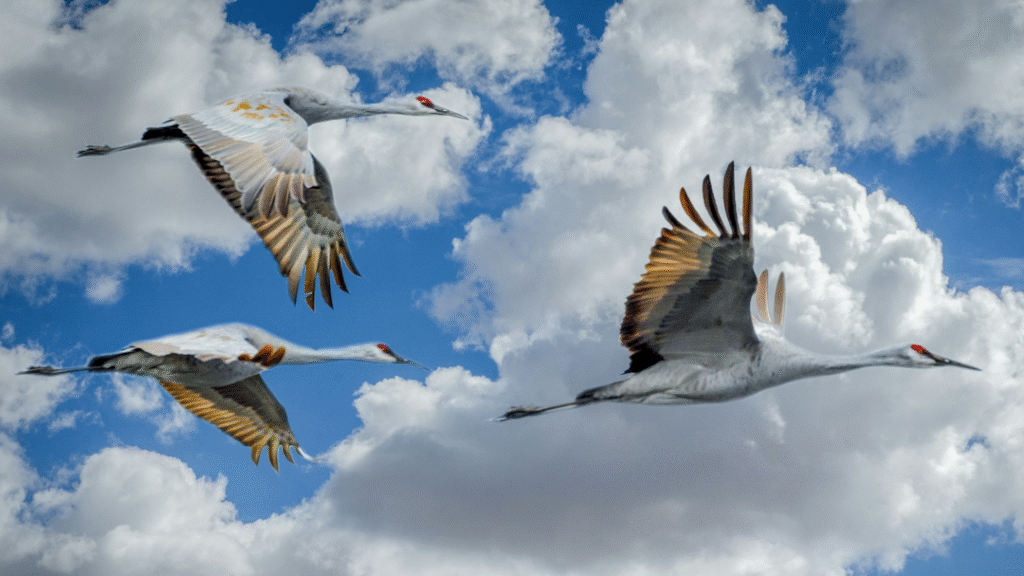
MADISON, Wisconsin — A bill authorizing a regulated sandhill crane hunting season in Wisconsin cleared the Wisconsin State Assembly this week, reigniting a long-running debate over how to manage one of the state’s fastest-growing and most visible bird populations. Supporters say the measure would give wildlife managers a new tool to address agricultural damage and population pressures, while opponents argue the iconic birds remain a conservation success story that should not be hunted.
The proposal now heads to the Wisconsin State Senate, where its future remains uncertain.
Why Lawmakers Are Considering a Hunt
Sandhill cranes were once rare in Wisconsin but have rebounded dramatically over the past several decades. State wildlife officials estimate the Eastern Population now numbers well into the hundreds of thousands across the Upper Midwest, with tens of thousands summering in Wisconsin.
Farmers have increasingly reported crop losses from cranes feeding in newly planted corn and other grains. Supporters of the bill argue a carefully regulated season could:
- Help deter agricultural damage
- Improve management flexibility
- Align Wisconsin with other states that already allow crane hunting
Several states in the Central Flyway and portions of the Mississippi Flyway currently hold limited sandhill crane seasons under federal frameworks.
What the Bill Would Do
While final details could evolve, the legislation directs the Wisconsin Department of Natural Resources to develop a regulated hunting framework if federal approval is granted. Key components discussed include:
- A limited permit drawing system
- Strict season dates and harvest quotas
- Mandatory harvest reporting and monitoring
- Coordination with federal migratory bird regulations
Because sandhill cranes are protected under the Migratory Bird Treaty Act, any hunt would require federal authorization.
Farmers and Rural Communities Back the Proposal
Agricultural groups have been among the most vocal supporters, pointing to repeated crop losses. Farmers in central and northern Wisconsin report cranes pulling up germinating corn and feeding in planted fields. Some say non-lethal deterrents — including propane cannons and visual scare devices — provide only temporary relief.
Ranchers and rural landowners also argue that expanding crane numbers contribute to localized habitat impacts and economic strain.
Hunters See Opportunity — and Responsibility
Many Wisconsin hunters support the bill, viewing sandhill cranes as a potential new hunting opportunity and a high-quality wild game bird.
Waterfowl and upland hunters often refer to crane meat as the “ribeye of the sky,” and supporters emphasize that regulated hunting can coexist with strong conservation outcomes.
However, some sportsmen’s groups stress that any season should be:
- Scientifically justified
- Limited in scope
- Designed to avoid impacts to migrating whooping cranes, which remain federally endangered
Conservation Groups Raise Ethical and Ecological Concerns
Opposition from wildlife advocates and birding organizations remains strong. Critics argue that sandhill cranes are a conservation success story and an important species for wildlife viewing and ecotourism.
They also question whether hunting would significantly reduce crop damage and warn of potential risks to protected whooping cranes that migrate through Wisconsin.
Some conservationists advocate instead for expanded non-lethal management tools and habitat strategies to reduce conflicts.
What It Could Mean for Wildlife and Habitat
Biologists note that sandhill cranes are long-lived birds with relatively low reproduction rates, meaning population changes occur slowly. A tightly controlled hunt would likely have minimal effect on overall population size but could influence local distribution and behavior.
For hunters, the broader habitat implications may be equally important. Wetland conservation and grassland management — both critical for cranes — also benefit waterfowl, deer, turkey, and other game species.
What Happens Next
The bill now moves to the Wisconsin Senate. If approved and signed into law, wildlife managers would begin working with federal regulators to determine whether and how a Wisconsin crane season could be implemented.
For now, the debate highlights a familiar theme in modern wildlife management: balancing conservation success with agricultural impacts, hunting opportunity, and public values.
As the discussion continues, Wisconsin hunters may want to stay engaged — because decisions made in Madison could shape the future of bird hunting and habitat policy across the Upper Midwest.
Hunterizer App
Hunting Wisconsin? See exactly what’s in season at your GPS location.
The Hunterizer app shows species, bag limits, and zone rules for your exact coordinates — for every county in Wisconsin.