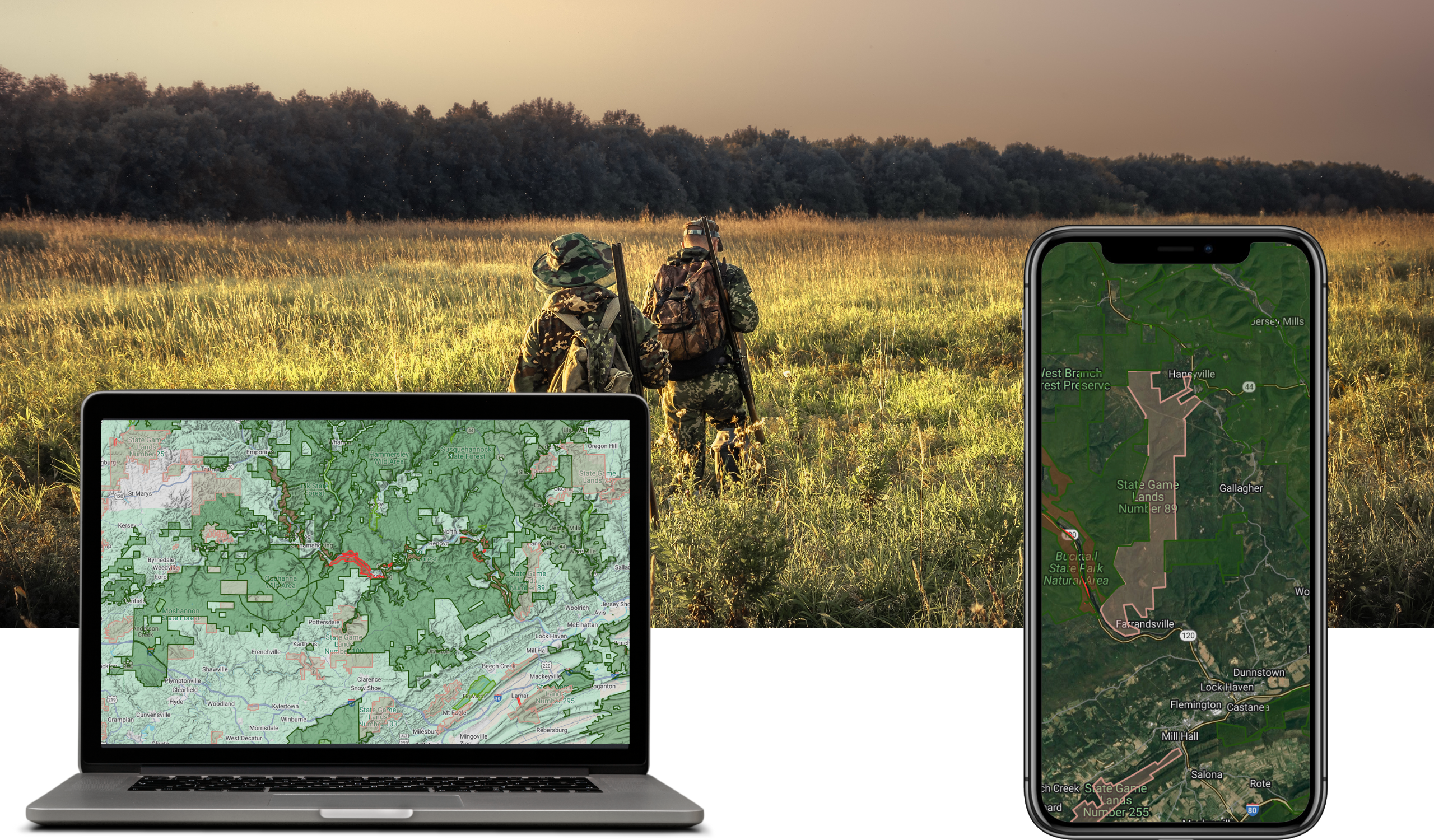
See what you can hunt at your location in the Hunterizer Seasons app.
Hunters and anglers could soon see expanded access across millions of acres of federal land following a new directive from the U.S. Department of the Interior (DOI). Secretary of the Interior Doug Burgum has signed a sweeping order instructing all Interior bureaus to remove unnecessary barriers to hunting and fishing and to treat public access as the default—not the exception.
The order makes it clear: federally managed lands and waters should be open to hunting and fishing unless there is a specific, legally supported reason to restrict access. For sportsmen who have long dealt with patchwork rules, confusing closures, and restrictions that go beyond state regulations, this policy shift could have real, on-the-ground impacts.
What the Order Means for Hunters
Under the new directive, agencies such as the U.S. Fish and Wildlife Service (FWS), Bureau of Land Management (BLM), National Park Service (NPS), and Bureau of Reclamation (BOR) are required to review existing regulations and identify opportunities to expand or restore hunting and fishing access. This includes big game, upland birds, waterfowl, small game, and recreational fishing.
Agencies must also justify any proposed closures or limits with clear documentation tied to law, public safety, or biological need. In other words, restrictions can no longer be imposed simply because “that’s how it’s always been done.”
The order places a strong emphasis on aligning federal rules with state wildlife agency regulations whenever possible. That could reduce conflicts between state seasons and federal land rules, especially in areas where hunters move between state, federal, and mixed-ownership lands.
Changes Hunters May Notice
Several provisions in the order stand out for hunters:
Expanded access reviews: Within 60 days, each DOI bureau must identify lands and waters where hunting and fishing opportunities can be added or expanded.
Fewer administrative hurdles: Agencies are directed to eliminate outdated permits, duplicative rules, and unnecessary seasonal closures that are not required by law.
Consistency across regions: Units within the same state or region are encouraged to apply rules more uniformly, reducing confusion for hunters traveling between areas.
Limits on lead ammo bans: Restrictions on lead ammunition or tackle cannot be imposed at the local level without strong, site-specific scientific justification and approval from agency leadership.
For National Wildlife Refuges, any proposal to limit or declare hunting incompatible must now be elevated to the national level for review, adding a layer of accountability hunters have long asked for.
National Parks, BLM, and Refuges in Focus
The National Park Service has been ordered to review superintendent compendiums and park-specific rules to determine whether hunting or fishing restrictions exceed what Congress actually authorized. Parks and preserves where hunting is allowed—such as national preserves, recreation areas, seashores, and lakeshores—must be evaluated for potential expansion.
BLM lands, which already provide some of the best public hunting access in the country, will undergo a review of discretionary closures and special rules that may unnecessarily restrict seasons or methods of take.
The Bureau of Reclamation will also review fishing access on reservoirs and project lands, with a focus on removing duplicative or outdated restrictions.
State Wildlife Agencies Get a Bigger Role
A key part of the order is improved coordination with state, tribal, and territorial wildlife agencies. DOI bureaus are instructed to rely on state management frameworks whenever possible and to avoid federal rules that duplicate or conflict with state regulations.
For hunters, this reinforces the role of state wildlife agencies as the primary managers of wildlife populations and could lead to regulations that better reflect local conditions.
What Happens Next
This order takes effect immediately, but changes won’t happen overnight. Agencies must submit reports outlining access opportunities and regulatory barriers within the next several months. Final rule changes will come through existing planning and rulemaking processes, meaning public input will still play a role.
Still, the message from Interior is unmistakable: hunting and fishing are core uses of public lands, and federal agencies are being directed to expand—not shrink—opportunity.
For hunters who rely on public land access, this could be one of the most significant policy shifts in years.
Source: https://www.doi.gov//document-library/secretary-order/so-3447-expanding-hunting-and-fishing-access-removing-unnecessary
Hunterizer App
Know exactly what you can hunt — today, at your location.
Hunting season dates, bag limits, and regulations for 11 states: CA, GA, ID, MI, MT, NY, PA, TN, TX, WA, and WI.