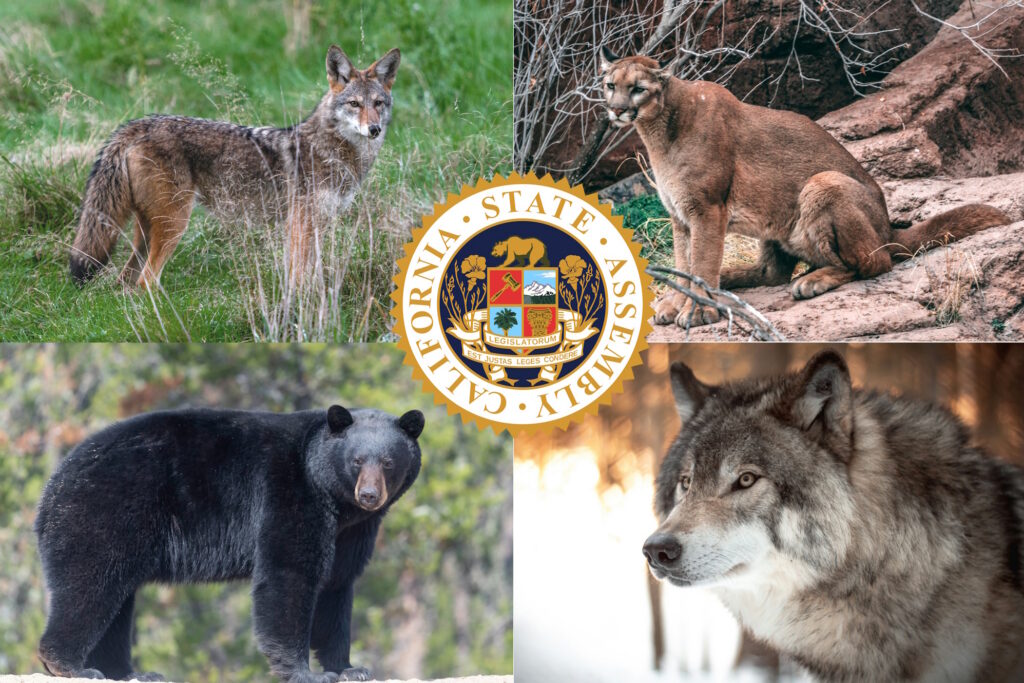
On January 27, 2026, the California Assembly Water, Parks and Wildlife Committee convened an informational hearing at the State Capitol in Sacramento to grapple with one of the most pressing wildlife management issues facing the state today: human–wildlife conflict. The hearing — held in Room 444 at 9 a.m. — drew testimony from experts, rural stakeholders, wildlife officials, and advocacy groups focused on both conservation and predator control.
👉 Watch the full hearing or view agenda here.
🐺 Conflict on the Rise: Wolves and Other Predators in Focus
Assembly members heard robust testimony on the challenges posed by a growing gray wolf population, expanding mountain lion territories, and increased encounters with bears and coyotes across California.
State officials noted that wolves — protected under both the California Endangered Species Act and the federal Endangered Species Act — have returned after being absent from the state for nearly a century, marking a conservation success story. But that comeback has brought management challenges: increased livestock depredation, economic strain on ranchers, and community safety concerns in rural areas. See link: https://wildlife.ca.gov/HWC/Wolves
“It’s clear this isn’t just an ecological issue — it’s an economic and social one,” one committee member said, reflecting concerns from rural stakeholders who reported ongoing losses. “[We need] policies that protect wildlife but don’t leave ranchers without tools to safeguard their livelihoods.”
🗣️ Voices from the Capitol: Conservation vs. Control
Wade Crowfoot, California’s Secretary of Natural Resources, addressed legislators, stressing the complex balance between wildlife conservation and public safety. He described the situation as a “human–wildlife conflict crisis” and urged stronger support for coexistence tools, including non-lethal deterrents and collaborative management plans.
By contrast, several ranchers and rural advocates spoke about the tangible impacts of predator attacks on livestock. One livestock producer noted the financial toll of repeated losses and the limited legal tools available when predators repeatedly threaten herds.
Some speakers — including hunters and predator-control advocates — argued that current protections for certain species can be too rigid when predators begin to exhibit habituation to livestock, creating persistent conflict zones that non-lethal methods fail to resolve.
“When a wolf pack stops fearing humans and starts treating cattle as easy prey, ranchers are left without options,” one rural livestock owner told the committee. “We respect wildlife and conservation, but there has to be accountability when these animals threaten our way of life.”
🧠 Expert Insights and Management Tools
Wildlife biologists and representatives from the California Department of Fish and Wildlife (CDFW) outlined current strategies used to mitigate human-wildlife conflict, including:
- Non-lethal deterrents such as range riders, fladry fencing, and guard animals
- Compensation programs for confirmed livestock losses
- Collaborative monitoring and data sharing with landowners
CDFW personnel emphasized that while predation on livestock is real, wolves rarely pose a direct threat to human safety, and California law prohibits lethal take except under narrowly defined conditions.
🐾 The Local Context: Beyond the Hearing
The hearing took place amid ongoing debate across the West about wolf management. In other states, wolf predation has fueled calls for “special zones” where lethal control is permitted following repeated livestock losses — proposals that resonate with many California ranchers. For example, in Sierra Valley and surrounding counties, wolf behavior has prompted heated discussion over management choices after documented livestock attacks.
At the same time, conservation groups — including organizations like the California Wolf Foundation, which promotes coexistence strategies while advocating for habitat protection — encouraged participation in the hearing and urged lawmakers to consider educational and non-lethal approaches alongside compensation and prevention tools.
📌 Looking Forward: Policy and Public Input
The hearing did not produce immediate legislative action, but it underscored the intense policy tensions around wildlife management in California. Lawmakers signaled openness to refining state programs, improving compensation processes, and possibly adjusting wildlife management authorities — all while trying to keep both ecosystems and rural economies healthy.
For those who couldn’t attend in person, the live stream and committee agenda were made available on the California State Assembly’s website:
https://www.assembly.ca.gov/media/assembly-water-parks-and-wildlife-committee-20260127
Hunterizer App
Hunting California? See exactly what’s in season at your GPS location.
The Hunterizer app shows species, bag limits, and zone rules for your exact coordinates — for every county in California.